
Why Proper Drainage Protects Lincoln Homes' Foundation
Water pooling in your yard after a spring storm might seem like a minor inconvenience. Give it a few years, though, and that standing water can turn into cracked basement walls, a shifting foundation, and repair bills that make your eyes water more than the puddles ever did.
Landscape drainage in Lincoln, NE matters more than most homeowners realize. Our combination of clay-heavy soil, dramatic temperature swings, and intense seasonal rainfall creates conditions that punish properties without proper water management. The good news: drainage problems are fixable, and addressing them early costs a fraction of what you’ll spend repairing foundation damage later.
This guide covers what every Lincoln homeowner should know about protecting their property through effective drainage.
Why Lincoln Properties Face Unique Drainage Challenges
Lincoln sits on soil that works against homeowners when it comes to drainage. Most of Lancaster County has clay-based soil with poor percolation rates, meaning water sits on the surface rather than soaking into the ground. After a heavy rain, you can watch puddles stick around for days in yards with high clay content.
Then there’s the weather. Nebraska’s Zone 5b climate means we get everything: spring deluges that drop several inches in 24 hours, summer thunderstorms that overwhelm gutters, fall rains that saturate already-wet soil, and freeze-thaw cycles that turn trapped water into a foundation-cracking machine.
The average annual rainfall in Lincoln runs around 28-30 inches, with most of it falling between April and August. That concentrated precipitation window puts enormous stress on properties with inadequate drainage. Water that can’t escape finds the path of least resistance, and that path often leads straight to your foundation.
What Clay Soil Does to Your Yard
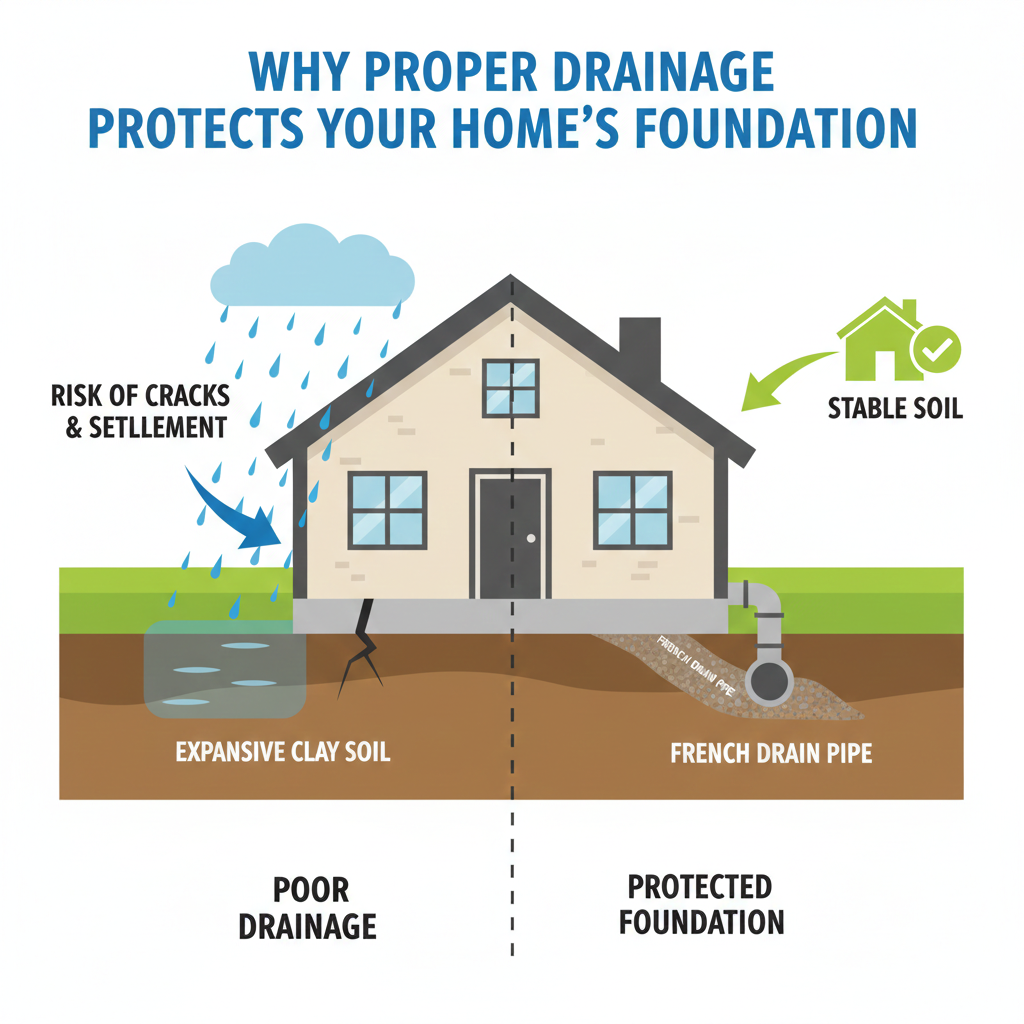
Clay soil behaves differently than loam or sandy soil. When it gets wet, it expands. When it dries out, it shrinks and cracks. This expansion-contraction cycle pushes against foundation walls during wet periods and then pulls away during dry spells, creating gaps where water can infiltrate.
Lincoln homes built on clay are particularly vulnerable during the transition seasons. March through May brings alternating freeze-thaw conditions combined with spring rains. October and November deliver a second round as the ground prepares for winter. These are the months when foundation damage accelerates.
Warning Signs of Poor Landscape Drainage
Drainage problems announce themselves if you know what to look for. Some signs are obvious. Others take a trained eye to spot before they become expensive repairs.
What You’ll Notice in Your Yard
Standing water that persists more than 24 hours after rain is the clearest indicator of a drainage problem. Healthy yards absorb or redirect water within a day. If you’re still looking at puddles two or three days after a storm, your drainage isn’t working.
Watch for erosion channels, especially along the edges of your property or near downspouts. These carved-out paths show where water is moving with enough force to carry soil away. Over time, erosion undermines landscaping, exposes roots, and redirects water toward your foundation rather than away from it.
Soggy areas that never fully dry out, even during summer, point to either a high water table or poor grading that traps moisture. These zones kill grass, promote mosquito breeding, and create conditions where water constantly presses against your foundation.
Signs Inside Your Home
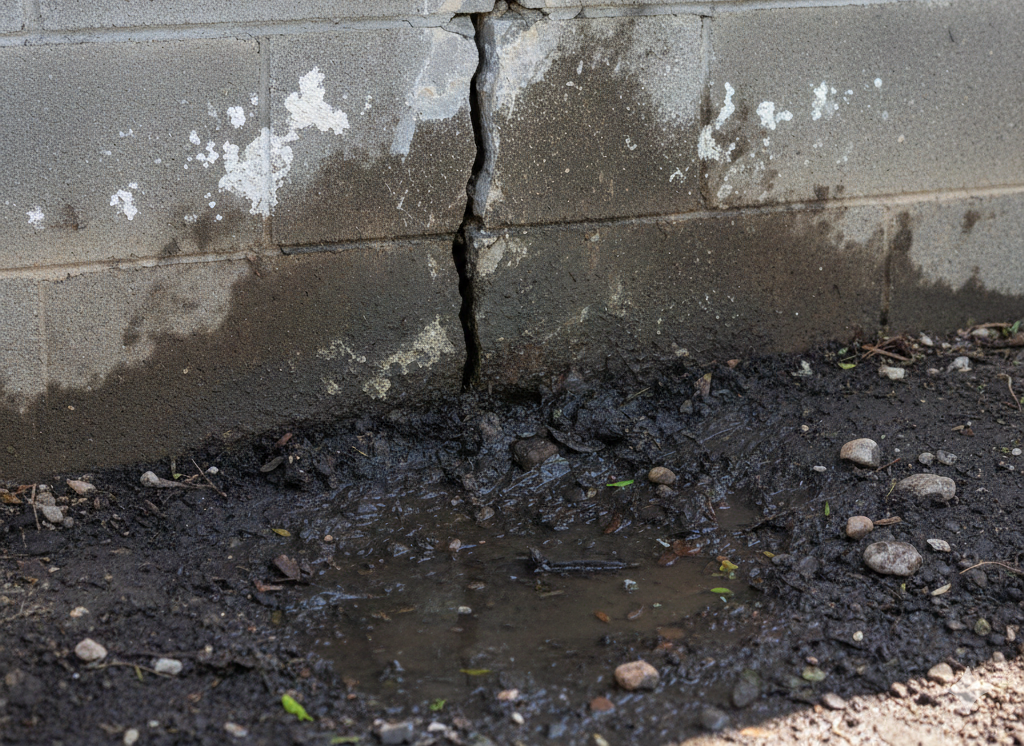
Basement dampness or musty smells often trace back to exterior drainage problems. If your basement walls feel damp to the touch or you notice efflorescence (white mineral deposits on concrete), water is finding its way in from outside.
Cracks in foundation walls, especially horizontal cracks or stair-step cracks in block foundations, can indicate hydrostatic pressure from water-saturated soil pushing against the structure. These cracks tend to appear or widen during wet seasons and may seem to shrink during dry periods.
Doors and windows that stick or won’t close properly sometimes point to foundation movement caused by drainage issues. As the foundation shifts, it throws door frames and window frames out of alignment.
How Water Damages Foundations
Understanding the mechanics of water damage helps explain why drainage deserves serious attention. Foundation damage rarely happens all at once. It’s a gradual process that compounds over years.
Hydrostatic Pressure
When soil becomes saturated, water exerts pressure against everything it touches, including your foundation walls. A cubic foot of water weighs about 62 pounds. Multiply that across your entire foundation, and you’re looking at thousands of pounds of pressure pushing against concrete or block.
Foundation walls are strong, but they’re designed to handle soil pressure, not continuous water pressure. Over time, hydrostatic force can bow walls inward, crack corners, and push water through joints and any microscopic openings in the concrete.
Freeze-Thaw Cycling
Lincoln’s climate produces dozens of freeze-thaw cycles every winter. Water that seeps into small cracks or pores in concrete expands by about 9% when it freezes. That expansion forces cracks wider. When temperatures rise, the water thaws and seeps deeper into the now-larger crack. The next freeze expands it further.
This cycle is why a hairline crack in October can become a significant crack by April. It’s also why drainage problems that seem manageable in summer often reveal their full damage after winter.
Soil Movement and Settlement
Poorly drained soil doesn’t just push against foundations—it also moves under them. Saturated clay becomes unstable and can shift, causing uneven settlement. Dry clay shrinks away from foundations, creating voids where water can pool during the next rain.
This constant movement stresses foundations in ways they weren’t designed to handle. Cracks develop at stress points, and over time, the entire structure can shift out of level.
Landscape Drainage Solutions for Lincoln Homes
Effective landscape drainage in Lincoln, NE usually requires a combination of techniques rather than a single fix. The right approach depends on your specific property, the severity of your drainage issues, and your budget.
Grading and Slope Correction
Proper grading forms the foundation of any drainage plan. The ground around your home should slope away from the foundation at a rate of at least one inch per foot for the first six feet. Many Lincoln homes lack this slope, either because of original construction shortcuts or because soil has settled over time.
Regrading involves adding or removing soil to create the correct slope. It’s a straightforward concept that requires careful execution. Done poorly, regrading can redirect water toward other problem areas or create new drainage issues.
Expect to pay between $500 and $3,000 for professional regrading around a typical Lincoln home, depending on the scope of work needed and accessibility. Larger projects that involve significant soil addition or removal can run higher.
French Drains
French drains intercept subsurface water and redirect it away from your foundation. They consist of a perforated pipe buried in a gravel-filled trench, typically installed around the perimeter of a home or across areas where water collects.
In Lincoln’s clay soil, French drains work best when combined with proper grading. The dense clay limits how much water can percolate naturally, so the French drain provides an escape route for water that would otherwise pool against the foundation.
French drain installation costs typically range from $25 to $50 per linear foot for exterior systems. A 100-foot perimeter installation might run $2,500 to $5,000 for labor and materials. Interior French drains (installed inside basement walls) cost more due to the additional work involved.
Surface Drains and Catch Basins
Surface drains capture water from low spots in your yard and channel it through underground pipes to a discharge point. Catch basins work similarly but handle larger volumes of water, making them useful at the base of slopes or in areas where multiple drainage paths converge.
These systems work well in flat yards where regrading alone can’t solve the problem. They’re also effective at managing runoff from patios, driveways, and other hardscaped areas.
Individual surface drains typically cost $200 to $600 installed, including the drain, pipe, and labor. Complete systems with multiple drains and extensive piping can range from $1,500 to $5,000 depending on complexity.
Downspout Extensions and Underground Discharge
Your gutters collect thousands of gallons of water every year. If downspouts dump that water right next to your foundation, they’re part of the problem rather than the solution.
Downspout extensions carry water at least four to six feet away from the foundation. Underground discharge systems go further, routing water through buried pipes to a discharge point well away from the home. This approach keeps water invisible and prevents the erosion that surface extensions can cause.
Simple above-ground extensions cost under $20 per downspout. Underground systems run $300 to $800 per downspout including trenching, pipe, and a pop-up emitter or connection to a larger drainage system.
Dry Wells and Rain Gardens
Sometimes the best solution involves giving water a place to go rather than trying to move it off your property. Dry wells are underground chambers filled with gravel that accept water from drainage systems and allow it to slowly percolate into the surrounding soil.
Rain gardens serve a similar purpose above ground. These shallow planted depressions capture runoff and allow it to infiltrate over 24 to 48 hours. Planted with native Nebraska species adapted to wet-dry cycles, rain gardens add visual interest while solving drainage problems.
Dry well installation typically costs $1,000 to $3,000 depending on size and depth. Rain gardens range from $500 for a simple DIY installation to $3,000 or more for a professionally designed and planted garden.
Swales and Berms
Swales are shallow channels that direct surface water across your property. Berms are raised areas that block water from moving in certain directions. Used together, these landscaping features can redirect drainage without the expense of underground systems.
Lincoln properties with significant grading issues or water flowing from neighboring lots often benefit from swales and berms. They’re particularly effective in larger yards where there’s room to work with topography.
Professional swale installation runs $500 to $2,000 for most residential applications. Berms cost similarly, depending on length and height.
Timing Your Drainage Project in Lincoln
When you install drainage matters almost as much as what you install. Nebraska’s seasons create distinct windows of opportunity and periods best avoided.
Best Times for Drainage Work
Late spring (May through mid-June) offers ideal conditions for most drainage projects. The ground has thawed and dried enough to work, but you’ll have the system in place before summer storms test it. This timing also allows any disturbed lawn areas to recover during the growing season.
Early fall (September through mid-October) provides a second good window. Soil conditions are typically workable, contractor schedules may be more flexible after the busy summer season, and you’ll have drainage in place before winter freeze-thaw cycles begin.
When to Avoid Drainage Installation
Late fall and winter (November through March) aren’t practical for most drainage work. Frozen ground makes digging difficult or impossible, and any disturbed soil will sit exposed through winter, potentially creating new erosion problems.
Peak rainy season (late March through April) can complicate projects too. Saturated soil is harder to work with, trenches can fill with water before pipes are installed, and equipment can damage soggy lawns more than necessary.
Professional Drainage Assessment: What to Expect
A professional drainage assessment examines your entire property to identify water sources, flow patterns, and problem areas. Here’s what that process typically involves.
Site Evaluation
A qualified professional will walk your property looking for visible drainage indicators: slope direction, low spots, erosion patterns, staining on foundation walls, and the condition of existing drainage features. They’ll check downspout locations and discharge points, examine the grade against your foundation, and note any hardscape features that affect water flow.
The evaluation should also consider neighboring properties. Water from uphill neighbors can contribute significantly to your drainage problems, and any solution needs to account for that input.
Soil Analysis
Understanding your soil composition affects drainage system design. While Lincoln generally has clay soil, the exact composition varies across different neighborhoods and even across individual properties. A percolation test measures how quickly water drains through your specific soil, helping determine whether certain solutions will work on your lot.
System Recommendations
Based on the evaluation, you should receive specific recommendations rather than generic advice. A good assessment explains why certain solutions fit your situation, provides estimated costs for different approaches, and prioritizes improvements if budget requires phasing the work.
Questions to Ask Before Hiring a Drainage Contractor
Not every landscaper handles drainage work, and not every drainage contractor does it well. These questions help separate qualified professionals from those who might leave you with problems rather than solutions:
Do you have experience with Lincoln’s clay soil? Local experience matters. Solutions that work in sandy soil won’t perform the same here.
Will you evaluate my entire property, or just the problem area I mentioned? Good contractors look at the whole picture before proposing solutions.
Where will the water discharge? Every drainage system needs an endpoint. That destination needs to be appropriate and legal—you can’t simply redirect your drainage onto a neighbor’s property.
What happens if the system doesn’t solve the problem? Understanding warranty and follow-up policies before work begins prevents disputes later.
Will you pull necessary permits? Lincoln may require permits for certain drainage work, especially systems that connect to storm sewers or affect property lines.
DIY vs. Professional Drainage Work
Some drainage improvements suit DIY installation. Others demand professional expertise. Knowing the difference saves money on simple projects and prevents costly mistakes on complex ones.
Suitable DIY Projects
Downspout extensions, simple splash blocks, and minor regrading within a few feet of the foundation fall within most homeowners’ abilities. Installing a rain barrel or creating a small rain garden can be weekend projects with basic tools.
These projects typically cost less than $200 in materials and can make a noticeable difference in minor drainage situations.
Projects Requiring Professional Help
French drains, extensive regrading, underground discharge systems, and anything involving significant excavation should be left to professionals. These projects require proper slope calculations, an understanding of where water will go, and the equipment to do the work efficiently.
Mistakes in DIY drainage installation can make problems worse. A French drain with the wrong slope won’t drain. An undersized catch basin will overflow during heavy rain. Improper connections to existing systems can cause backups that damage your property or your neighbors’.
The Cost of Doing Nothing
Drainage problems don’t fix themselves. They get worse with each passing season, and the repair costs escalate accordingly.
Minor foundation repairs—sealing cracks, patching small damaged areas—might cost $500 to $2,000. Moderate repairs involving wall stabilization or crack injection run $3,000 to $7,000. Major structural repairs requiring underpinning or wall replacement can exceed $20,000, sometimes significantly.
Beyond direct repair costs, foundation damage affects home value. Buyers and their inspectors notice foundation problems, and even repaired damage can reduce what your home commands on the market.
Compare those numbers to the cost of proper drainage installation. A few thousand dollars spent proactively can prevent tens of thousands in repairs later.
Maintaining Your Drainage System
Drainage systems need maintenance to keep working. Neglect a French drain long enough, and it will clog. Ignore a catch basin, and it will fill with debris. Regular attention keeps your investment performing.
Seasonal Maintenance Checklist
Spring: After the last freeze, inspect all visible drainage components. Clear debris from catch basin grates, check that downspout connections are secure, and verify that discharge points are unobstructed. Walk the property after a rain to confirm water is flowing as intended.
Summer: Keep an eye on drainage performance during heavy storms. Note any areas where water pools longer than expected or where flow patterns have changed. Trim vegetation near drainage components that might obstruct flow.
Fall: Clean leaves and debris from all drainage inlets before winter. Inspect French drain cleanout ports if your system has them. Ensure all above-ground components are in good condition before freeze.
Winter: After snowmelt events, check that water is draining properly. Ice dams in drainage systems can cause temporary backups; note any problem areas for spring attention.
Landscape Drainage and Lincoln Building Codes
Lincoln has regulations affecting drainage work, and understanding them before starting a project prevents complications.
The city’s stormwater management requirements prohibit directing drainage onto neighboring properties without agreement. You can’t simply install a system that pushes your water problem onto someone else’s lot.
Connections to the city storm sewer system require permits and must meet specific standards. Not all properties have access to storm sewers, and even those that do may face restrictions on what can be connected.
Grading changes that significantly alter drainage patterns may require permits, particularly for larger projects or those near property lines. A reputable contractor will know what permits your project needs and handle the application process.
Take Action Before Water Takes Its Toll
Landscape drainage in Lincoln, NE isn’t glamorous, but it’s one of the most practical investments you can make in your property. Proper drainage protects your foundation, preserves your landscaping, and prevents the kind of damage that turns minor problems into major expenses.
If you’ve noticed water pooling in your yard, damp basement walls, or any of the other warning signs discussed here, don’t wait for the problem to worsen. Schedule a drainage assessment now, during a season when solutions can be implemented, rather than discovering the full extent of the damage during the next heavy rain.
Priority Lawn and Landscape helps Lincoln homeowners solve drainage problems before they become foundation problems. Our team understands local soil conditions, seasonal challenges, and the drainage solutions that work in Lancaster County. Contact us to schedule an assessment and get a clear picture of what your property needs.
EXCELLENT Based on 26 reviews
 Posted on Google
 Kelsey SlausonPosted on Google
 Amy JensenThank you Priority Lawn for taking care of my yard! I had lots of weeds and unwanted plants growing throughout my yard. I had contacted a few other places and found that they only spray weeds and do not dig them up. What a disappointment! Not only did Priority Lawn take care of them all they did a fantastic job!Posted on Google
 RyanPriority did a great job. Would recommend to anyonePosted on Google
 David MattinglyBryce was awesome from the design meeting throughout the project. Very professional and a great job on my new grill area on THANKSPosted on Google
 Barbara AndersonPosted on Google
 Alex SwiatekPosted on Google
 Diane HudsonExcellent, quality work. Very professional, knowledgeable, and skilled.! Excited to work with this company in the future!Posted on Google
 Tahner PHuge shoutout to Bryce and the whole Priority team who came out last week. Bryce was super helpful in figuring out the drainage issue we had going on and really gave us a good idea of what to expect and how it could be fixed. Also the quote was incredibly reasonable compared to many others we talked to. They did a great job getting the drainage done and we are already seeing a big difference in our yard. They also were awesome getting everything cleaned up. The biggest thing was how awesome they were to my 6 year old. He was so interested with what was going on, and they let him get involved and help out. For like 4-5 hours he was out there moving dirt and "helping." Hopefully it was not too much of a bother. Anyways, thanks a ton to the Bryce and his team!Posted on Google
 Sonja KroppWe are so pleased with the results of our landscaping project. Bryce provided us with invaluable suggestions, detailed (and reasonable) pricing estimates, and a timely schedule. His crew was very professional and attentive to last minute changes. Thank you!Posted on Google
 KIM KingI am so happy with Priority One! In just a few weeks, our yard is healthy, green, and growing! Our shrubs are beautifully thriving and trimmed. I am so excited for our landscaping project to begin very soon! Great customer service, attention to detail and knowledgeable! Thank you!Verified by TrustindexTrustindex verified badge is the Universal Symbol of Trust. Only the greatest companies can get the verified badge who has a review score above 4.5, based on customer reviews over the past 12 months. Read more
About the Author
