
Spring Fertilization Schedule for Nebraska Lawns
Timing matters more than the fertilizer you choose. Apply too early and you push tender growth into a late frost. Wait too long and you miss the window when grass roots are actively absorbing nutrients. Lincoln sits in USDA Plant Hardiness Zone 5b-6a, which puts us in a tricky spot — warm enough for warm-season grasses in some yards, but primarily cool-season turf territory where the spring feeding window opens and closes faster than most homeowners expect.
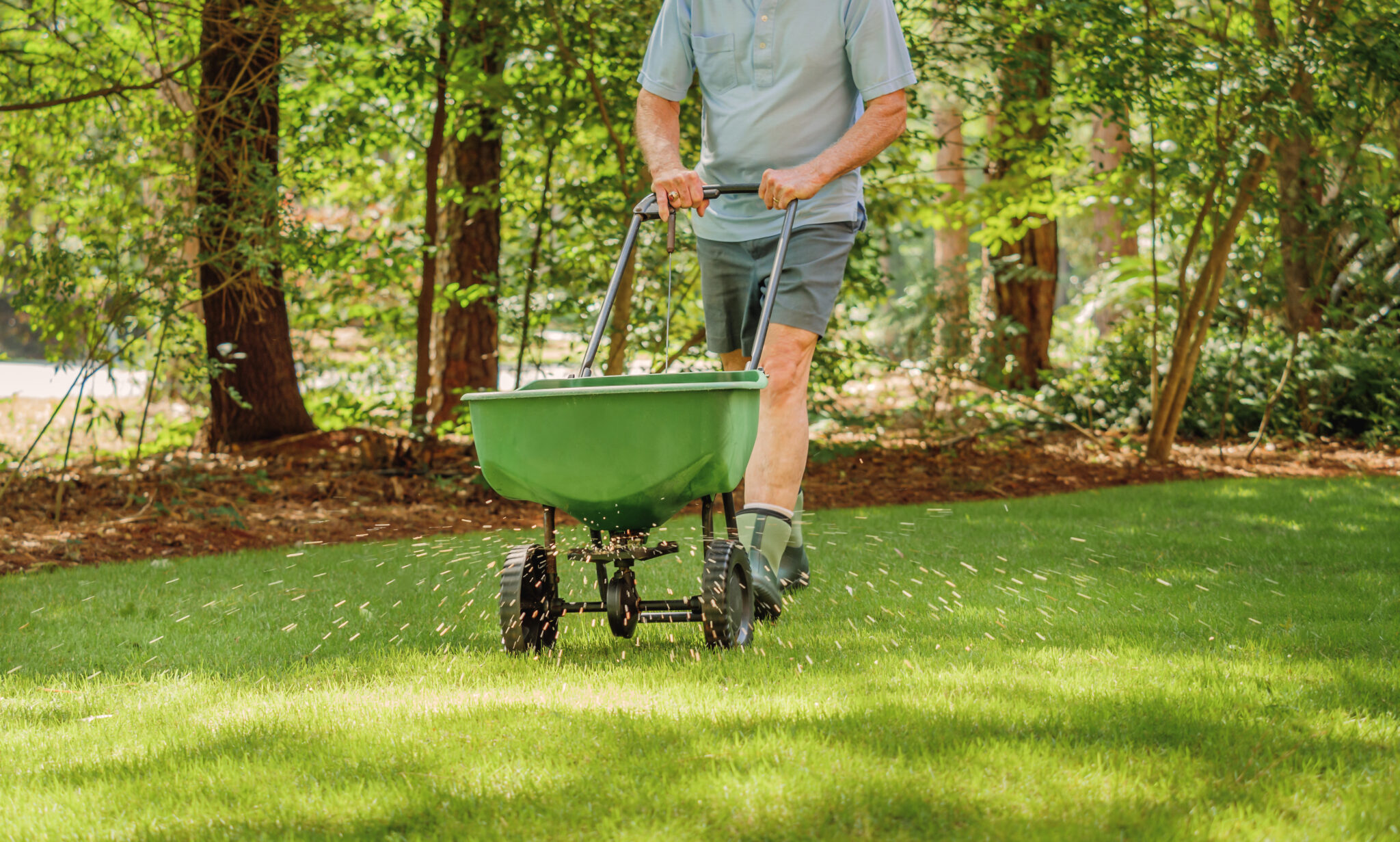
This schedule is built for cool-season lawns — primarily tall fescue and Kentucky bluegrass — which make up the majority of residential yards in Lincoln and Lancaster County. If you have a zoysia or bermuda patch, the timing shifts significantly and is covered at the end.
When to Fertilize Your Lawn in Nebraska: The Basics
The short answer for when to fertilize lawn in Nebraska: late April to mid-May for your first spring application. That’s when soil temperatures in Lincoln consistently reach 50–55°F at a 4-inch depth — the threshold where cool-season grass roots start absorbing nitrogen efficiently.
Soil temperature lags behind air temperature by two to three weeks. A string of 65°F days in late March doesn’t mean the ground is ready. If you fertilize when soil temps are still in the low 40s, most of the nitrogen either sits unused or leaches past the root zone before grass can use it.
The Nebraska Extension office tracks growing degree days and soil temperatures across the state. For Lincoln specifically, the safe spring fertilization window typically runs from April 20 through May 20, though late winters can push this back a week or two.
Why Early April Is Usually Too Soon
Many homeowners in Lincoln start itching to fertilize when they see green-up beginning in late March or early April. That early color is the grass using stored carbohydrates from fall — not a sign the lawn is ready for a nitrogen push.
Fertilizing before soils warm up causes two problems. First, rapid top growth with weak root development. Second, increased disease pressure, especially brown patch and dollar spot, which thrive when you push lush growth before the plant is structurally ready for it.
Spring Lawn Fertilization Schedule for Lincoln, NE
A properly timed spring program for cool-season turf in Lincoln involves two applications, not one.
Application 1: Late April to Early May
Target soil temp: 50–55°F
Use a slow-release nitrogen fertilizer with a roughly 3-1-2 N-P-K ratio (something like a 24-0-8 or 32-0-6 with sulfur-coated urea). Slow-release formulations feed over 6–10 weeks and reduce the risk of pushing too much growth too fast.
Rate: 0.5 to 0.75 lbs of actual nitrogen per 1,000 sq ft. More than 1 lb at this stage is excessive and increases disease risk.
Lincoln’s heavy clay soils — common throughout Lancaster County — hold nutrients differently than sandy soils. Clay retains cations like potassium and calcium well, but can become compacted and limit water and nutrient movement. If your lawn hasn’t been aerated recently, this first application won’t move through the profile as effectively.
Application 2: Late May to Early June
Target timing: 4–6 weeks after first application
This is optional depending on how your lawn responded to the first feeding. If you saw strong, even green-up and growth is healthy, you can skip the second spring app and shift focus to a late summer or fall program. If growth was patchy or the lawn came out of winter with thin areas, a half-rate second application (0.5 lbs N/1,000 sq ft) can help fill in.
Avoid fertilizing in June heat if temperatures are consistently above 85°F. That’s stressful territory for cool-season grasses, and nitrogen fertilization during heat stress increases disease and burn risk.
Choosing a Spring Fertilizer in Lincoln
Menards, Lowe’s, and local co-ops in Lincoln carry a solid range of fertilizers. Here’s what to look for on the bag:
- Slow-release nitrogen percentage: Look for at least 30–40% of the nitrogen in slow-release form (sulfur-coated urea, IBDU, or polymer-coated). Fast-release nitrogen is fine in small amounts but shouldn’t dominate a spring formula.
- Phosphorus: Most established Lincoln lawns don’t need phosphorus. A soil test from the Lancaster County Extension office (around $15–20) will tell you for certain. Skip the high-P starter fertilizers unless you’re seeding or sodding.
- Pre-emergent combo products: If crabgrass has been a problem, a fertilizer plus pre-emergent (like Scott’s Turf Builder with Halts) can simplify spring. Apply this when forsythia blooms — typically late March to early April in Lincoln — not when you’d normally fertilize. The pre-emergent timing and fertilizer timing don’t always line up.
Fertilizer Cost Ranges in Lincoln
For DIY applications, expect to spend:
- Bag fertilizer (5,000–15,000 sq ft coverage): $25–$55 per bag at local retailers
- Soil test (Lancaster County Extension): $15–$25
- Spreader rental if needed: $20–$35/day
Professional spring fertilization in Lincoln typically runs $45–$90 per application for a standard residential lot (under 10,000 sq ft), depending on the company and whether they include pre-emergent or weed control in the visit.
Spring Fertilizer Timing and Lincoln’s Weather Variability
Lancaster County weather makes rigid calendar dates unreliable. We’ve had snowstorms in late April, and we’ve had 80°F days in mid-March. Anchoring your fertilization to soil temperature rather than the calendar protects you from both extremes.
A soil thermometer (under $15) is worth owning. Push it 4 inches deep in a shaded part of your lawn away from south-facing walls or pavement. Check it for several consecutive mornings. When you’re seeing consistent readings of 50°F or higher, you’re in the window.
If you’d rather not buy a thermometer, the Nebraska Extension’s CropWatch website posts soil temperature data for Lincoln and surrounding counties during the growing season.
What to Do After a Late Freeze
If you’ve already fertilized and a hard freeze comes through — which happens in Lincoln — don’t panic. Established cool-season turf handles late frosts well once it’s out of dormancy. The bigger risk is if you applied a fast-release product right before a heavy rain and freeze cycle, which can push nitrogen past the root zone. Slow-release formulations reduce this risk significantly.
Spring Fertilization and Soil Health in Lancaster County
Lincoln’s native soils are mostly silty clay loam and clay — good nutrient holders but prone to compaction. Several things affect how your spring fertilizer performs:
- Thatch layer: More than 1/2 inch of thatch blocks fertilizer from reaching soil. If you’re seeing water bead on the surface after rain, thatch is likely the issue.
- Compaction: Heavy clay soils in established Lincoln neighborhoods compact over time. Core aeration in fall (the preferred timing) or spring helps fertilizer and water penetrate.
- pH: Nebraska soils tend toward neutral to slightly alkaline. If pH is above 7.5, nutrient availability drops even when fertilizer is present. A soil test catches this before you waste money on fertilizer that won’t perform.
Warm-Season Lawns in Lincoln: Different Timing Entirely
Zoysia is making inroads in newer Lincoln subdivisions, particularly in southern Lancaster County where slightly warmer microclimates give warm-season grass a better shot. If you have zoysia or bermuda:
- Hold off on fertilizing until the grass is at least 50% green-up — typically late May to early June
- Applying nitrogen to dormant warm-season turf encourages weed growth, not grass growth
- First application: late May/early June at 1 lb N/1,000 sq ft
- Follow-up applications every 4–6 weeks through mid-August
How Spring Fertilization Fits Into a Full-Year Plan
Spring fertilization is one piece of a program, not the whole thing. For cool-season lawns in Lincoln, fall is actually the most important feeding window — September and October applications build root reserves that determine how well your lawn comes out of winter and greens up in spring.
A well-fed lawn going into winter needs less correction in spring. If your fall program was solid, a single spring application is usually enough. If you skipped fall fertilization, you may need to be more aggressive in spring to compensate, but keep applications light and watch for disease pressure.
Typical Annual Schedule for Lincoln Cool-Season Lawns
- Late April – Early May: First spring application (0.5–0.75 lbs N/1,000 sq ft, slow-release)
- Late May – Early June: Optional second spring application if needed (0.5 lbs N/1,000 sq ft)
- September: First fall application — most important feeding of the year
- Late October – Early November: Second fall application before dormancy
Skip summer fertilization for cool-season grass. Lincoln summers push most cool-season lawns into semi-dormancy or stress. Feeding during heat stress does more harm than good.
Common Spring Fertilization Mistakes in Nebraska
- Fertilizing before soil temps hit 50°F — wastes product and stresses new growth
- Using starter fertilizer on an established lawn — high phosphorus isn’t needed and can run off into Lincoln’s storm drains
- Applying during a drought period — fertilizer without adequate moisture can burn grass and won’t move into the root zone
- Overlapping spreader passes — doubles the application rate in strips, causing uneven growth and potential burn
- Ignoring the label rate — more is not better with nitrogen
Getting Your Spring Fertilization Right
The difference between a lawn that thrives and one that struggles through summer often comes down to what happens in April and May. Proper spring fertilization in Nebraska sets root depth, disease resistance, and turf density for the months ahead.
For most Lincoln homeowners with cool-season grass, one well-timed application in late April or early May — using a quality slow-release product at the right rate — is all you need. Pair it with consistent mowing at 3.5 to 4 inches, and your lawn has the foundation to hold up through whatever Nebraska summer throws at it.
Priority Lawn and Landscape serves Lincoln and Lancaster County with professional fertilization programs tailored to local soil conditions and Nebraska’s variable spring climate. If you want a program that takes the guesswork out of timing and product selection, we’re happy to take a look at your lawn.
EXCELLENT Based on 26 reviews
 Posted on Google
 Kelsey SlausonPosted on Google
 Amy JensenThank you Priority Lawn for taking care of my yard! I had lots of weeds and unwanted plants growing throughout my yard. I had contacted a few other places and found that they only spray weeds and do not dig them up. What a disappointment! Not only did Priority Lawn take care of them all they did a fantastic job!Posted on Google
 RyanPriority did a great job. Would recommend to anyonePosted on Google
 David MattinglyBryce was awesome from the design meeting throughout the project. Very professional and a great job on my new grill area on THANKSPosted on Google
 Barbara AndersonPosted on Google
 Alex SwiatekPosted on Google
 Diane HudsonExcellent, quality work. Very professional, knowledgeable, and skilled.! Excited to work with this company in the future!Posted on Google
 Tahner PHuge shoutout to Bryce and the whole Priority team who came out last week. Bryce was super helpful in figuring out the drainage issue we had going on and really gave us a good idea of what to expect and how it could be fixed. Also the quote was incredibly reasonable compared to many others we talked to. They did a great job getting the drainage done and we are already seeing a big difference in our yard. They also were awesome getting everything cleaned up. The biggest thing was how awesome they were to my 6 year old. He was so interested with what was going on, and they let him get involved and help out. For like 4-5 hours he was out there moving dirt and "helping." Hopefully it was not too much of a bother. Anyways, thanks a ton to the Bryce and his team!Posted on Google
 Sonja KroppWe are so pleased with the results of our landscaping project. Bryce provided us with invaluable suggestions, detailed (and reasonable) pricing estimates, and a timely schedule. His crew was very professional and attentive to last minute changes. Thank you!Posted on Google
 KIM KingI am so happy with Priority One! In just a few weeks, our yard is healthy, green, and growing! Our shrubs are beautifully thriving and trimmed. I am so excited for our landscaping project to begin very soon! Great customer service, attention to detail and knowledgeable! Thank you!Verified by TrustindexTrustindex verified badge is the Universal Symbol of Trust. Only the greatest companies can get the verified badge who has a review score above 4.5, based on customer reviews over the past 12 months. Read more
About the Author
