
Crabgrass Prevention: Lincoln Spring Pre-Emergent Timing
Crabgrass is one of the most common lawn complaints in Lincoln, NE—and it’s almost always a timing problem, not a product problem. Homeowners apply pre-emergent too early, too late, or skip it entirely and then wonder why their lawn looks patchy by August.
Pre-emergent herbicides don’t kill crabgrass that’s already growing. They prevent seeds from germinating in the first place.
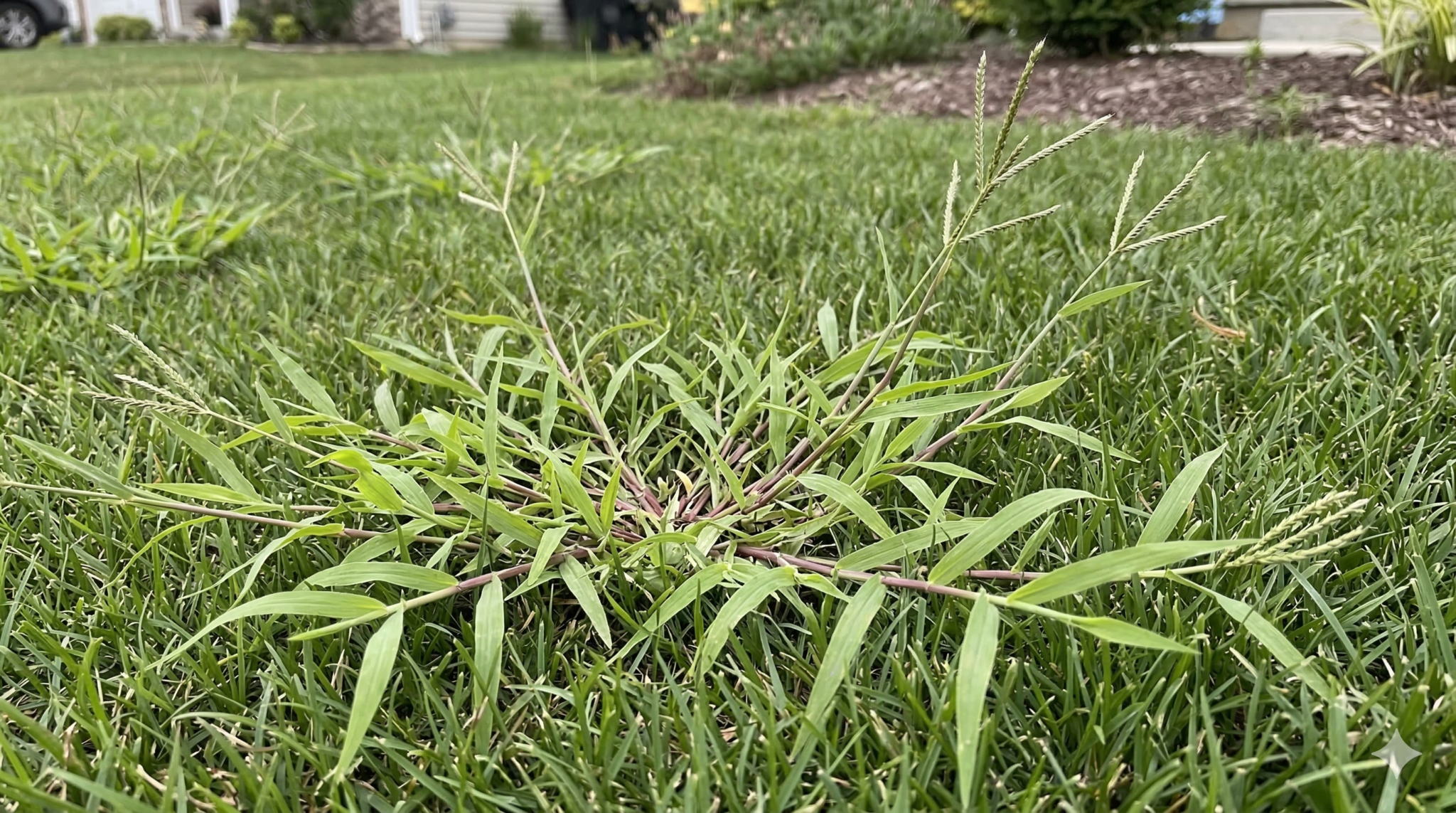
Miss the window and you’re managing a problem you can’t undo until fall.
Here’s what actually matters for crabgrass prevention in Lincoln—timing, soil temperature, and what to do if the schedule gets away from you.
Why Timing Is Everything for Pre-Emergent in Nebraska
Crabgrass seeds germinate when soil temperatures reach 50°F at a 2-inch depth and stay there for several consecutive days. In Lincoln, that threshold typically arrives in late March to mid-April—but it varies more than most people expect.
Nebraska sits at the edge of USDA hardiness zones 5b and 6a. Lancaster County specifically sees wide year-to-year swings in spring temperatures. A warm February can push soil temps up early, while a cold front in late March can delay germination by two to three weeks.
Applying pre-emergent by the calendar alone—say, “always on April 1st”—is a gamble. Some years that’s right on time. Other years it’s three weeks early and the product breaks down before crabgrass even starts germinating.
The 50°F Rule—and Why Most Homeowners Get It Wrong
The target is 50°F at 2 inches deep, not air temperature. Air temps in Lincoln can feel like spring while soil is still in the mid-40s. Soil holds cold longer than air—especially the clay-heavy soils common throughout much of Lancaster County.
Nebraska Extension tracks soil temperature data at monitoring stations around the state. You can check current readings at the University of Nebraska’s Mesonet before you spray. That extra step takes five minutes and takes the guesswork out of the decision.
Pre-Emergent Timing for Lincoln, NE: What to Expect by Month
Here’s how spring typically unfolds in Lincoln from a soil temperature standpoint:
- Early March: Soil temperatures are usually in the 35–42°F range. Pre-emergent applied now will break down before crabgrass germinates in most years. Hold off.
- Mid to Late March: Soil temps approach 45–48°F. Watch the trend. In a warm spring, this is when to be ready.
- Early to Mid April: This is the prime window most years. Soil temps cross 50°F and crabgrass germination begins. This is when pre-emergent needs to be down and watered in.
- Late April and Beyond: Crabgrass germination is actively underway. Pre-emergent is still worth applying if you’ve missed the ideal window, but results will be less reliable.
The practical takeaway: plan to apply pre-emergent between late March and the first two weeks of April in a typical Lincoln spring. Monitor soil temps starting in mid-March so you can act quickly when conditions are right.
If forsythia is blooming in your neighborhood, crabgrass germination is likely beginning. That’s a common rule of thumb—not a precise measurement, but a useful field indicator for Lincoln-area lawns.
Choosing the Right Pre-Emergent Product for Nebraska Lawns
Not all pre-emergent products are the same, and product selection matters for Lincoln lawns in particular because of two factors: clay soil and cool-season turf.
Most Lincoln yards are planted with cool-season grasses—primarily tall fescue and Kentucky bluegrass. These grasses have different sensitivities to pre-emergent active ingredients than warm-season turf, and some products labeled for general use can suppress desirable grass germination or thin out bluegrass stands if applied incorrectly.
Common Active Ingredients and What to Know About Each
- Prodiamine (Barricade): One of the longest-lasting pre-emergent options—typically 3–4 months of residual activity. Works well in Lincoln’s clay soils because it binds tightly to organic matter and doesn’t leach as easily. Safe for established fescue and bluegrass lawns.
- Pendimethalin (Scotts Halts, others): A widely available and effective option. Shorter residual than prodiamine, so split applications (one in early April, a second 6–8 weeks later) are common for season-long control. Stains concrete and hardscapes—rinse off driveways and sidewalks immediately after application.
- Dithiopyr (Dimension): Has some post-emergent activity on very young crabgrass seedlings, which makes it a useful option if you’re slightly late. Still primarily pre-emergent in function, but the flexibility makes it worth considering for Lincoln homeowners who can’t always hit the exact timing window.
Granular formulations are easier to apply evenly on residential lawns. Liquid concentrates are faster-acting and better suited to large properties or situations where quick activation is important. Either format works—the key is getting the product down before soil temps climb past 55°F.
How to Apply Pre-Emergent Correctly in Lincoln
Correct application is as important as timing. A product applied at the wrong rate or without adequate moisture will underperform regardless of which active ingredient you choose.
Watering In: The Step Most Homeowners Skip
Pre-emergent herbicides need to be activated by water. Most products require ½ inch of irrigation or rainfall within 24–48 hours of application to move the active ingredient into the soil where crabgrass seeds germinate.
Lincoln springs are unpredictable—some years April delivers steady rainfall, other years it’s dry for two weeks after a product goes down. If you’re applying granular pre-emergent, check the forecast. If no rain is coming within 48 hours, water it in yourself.
Clay soils—common throughout Lincoln and surrounding Lancaster County—can form a surface crust that prevents water penetration. If your lawn has compacted clay areas, light aeration before pre-emergent application improves both activation and overall effectiveness.
Getting the Application Rate Right
Over-application doesn’t improve results—it risks turfgrass injury and creates runoff risk. Under-application leaves gaps in coverage and reduces efficacy. Follow label rates. For most residential lawns in Lincoln, a granular pre-emergent spreader calibrated for your product and turf area is sufficient.
Measure your lawn area before purchasing. A common mistake is buying enough product for 5,000 square feet when the actual lawn is 8,000 square feet, then under-applying to stretch coverage.
What to Do If You Miss the Pre-Emergent Window
Missing the pre-emergent window is frustrating, but it doesn’t mean your lawn is lost for the season.
If it’s still early in the germination period (late April, soil temps just passed 55°F), dithiopyr-based products can help because of their limited post-emergent activity on very young plants. Apply as soon as possible.
If crabgrass is already visible—stems and leaves you can see—switch to a post-emergent product containing quinclorac or MSMA (where still available). Post-emergent control works best on young plants with fewer than five tillers. Once crabgrass matures through summer, chemical control becomes less effective and the goal shifts to preventing seed spread into fall.
The other option: accept the season, manage aggressively to limit seed production, and commit to a solid pre-emergent program the following spring. Crabgrass is an annual—it dies with the first frost. A strong fall lawn care program and proper pre-emergent timing next April eliminates most of what you see this year.
Pre-Emergent Application Costs in Lincoln, NE
Professional pre-emergent application for a typical Lincoln residential lawn (5,000–8,000 sq ft) generally runs between $55 and $120 for a single application. Larger properties or those requiring split applications will cost more.
DIY pre-emergent granules from a local garden center or big box store cost $25–60 for enough product to cover 5,000–7,500 square feet depending on the brand and active ingredient. The cost difference isn’t huge—the advantage of professional application is timing precision and consistent coverage, particularly for irregularly shaped lawns.
Multi-application programs (pre-emergent plus fertilization, weed control follow-up) offered by lawn care companies in Lincoln typically run $250–$500 for the season depending on lawn size and service inclusions.
The Connection Between Lawn Health and Crabgrass Pressure
Pre-emergent is a tool, not a fix. Lawns with thin turf, compacted soil, or heavy thatch are almost always more crabgrass-prone—not because pre-emergent fails, but because crabgrass thrives in gaps and weak spots that a healthy lawn would fill.
Lincoln-area lawns planted in clay soils benefit significantly from annual core aeration in the fall. Aeration reduces compaction, improves water infiltration, and creates conditions where cool-season turf can outcompete crabgrass naturally—even in a year where timing on the pre-emergent isn’t perfect.
Mowing height matters too. Cutting tall fescue and bluegrass at 3–3.5 inches rather than scalping it short creates canopy shade that suppresses crabgrass germination at the soil surface. It’s one of the most underused crabgrass prevention tools available to any Lincoln homeowner.
When to Call a Professional for Crabgrass Prevention in Lincoln
Most homeowners can handle pre-emergent application on their own. But a few situations make professional help worth considering:
- You’ve had persistent crabgrass problems for two or more years despite applying pre-emergent on your own, which usually points to timing or coverage issues that are worth having a professional assess.
- Your lawn has significant bare or thin areas that need reseeding—pre-emergent prevents both crabgrass and desirable grass seed from germinating, so seeding and pre-emergent timing need to be carefully managed.
- You’re dealing with a combination of crabgrass and broadleaf weeds, which often benefits from a coordinated treatment approach rather than individual product applications.
- Your lawn is large or has irregular shape, slopes, or drainage issues that make consistent self-application difficult.
Crabgrass Prevention Lincoln NE: Start Before the Problem Shows Up
Crabgrass prevention in Lincoln, NE comes down to one thing: getting pre-emergent down before soil temperatures reach 50°F at 2 inches deep. That window typically falls in late March to mid-April in Lancaster County, but monitoring actual soil temperature data is the only reliable way to hit it consistently.
Choose a product suited to cool-season turf, water it in within 48 hours of application, and back it up with good mowing height and fall aeration. That combination handles the vast majority of crabgrass issues on Lincoln-area lawns.
Priority Lawn and Landscape offers pre-emergent application and full seasonal lawn care programs for homes throughout Lincoln and the surrounding area. If you’d like help with timing, product selection, or a complete lawn care plan, reach out to our team.
EXCELLENTTrustindex verifies that the original source of the review is Google. Priority did a great job. Would recommend to anyonePosted onTrustindex verifies that the original source of the review is Google. Bryce was awesome from the design meeting throughout the project. Very professional and a great job on my new grill area on THANKSPosted onTrustindex verifies that the original source of the review is Google. Posted onTrustindex verifies that the original source of the review is Google. Posted onTrustindex verifies that the original source of the review is Google. Excellent, quality work. Very professional, knowledgeable, and skilled.! Excited to work with this company in the future!Posted onTrustindex verifies that the original source of the review is Google. Huge shoutout to Bryce and the whole Priority team who came out last week. Bryce was super helpful in figuring out the drainage issue we had going on and really gave us a good idea of what to expect and how it could be fixed. Also the quote was incredibly reasonable compared to many others we talked to. They did a great job getting the drainage done and we are already seeing a big difference in our yard. They also were awesome getting everything cleaned up. The biggest thing was how awesome they were to my 6 year old. He was so interested with what was going on, and they let him get involved and help out. For like 4-5 hours he was out there moving dirt and "helping." Hopefully it was not too much of a bother. Anyways, thanks a ton to the Bryce and his team!Posted onTrustindex verifies that the original source of the review is Google. We are so pleased with the results of our landscaping project. Bryce provided us with invaluable suggestions, detailed (and reasonable) pricing estimates, and a timely schedule. His crew was very professional and attentive to last minute changes. Thank you!Posted onTrustindex verifies that the original source of the review is Google. I am so happy with Priority One! In just a few weeks, our yard is healthy, green, and growing! Our shrubs are beautifully thriving and trimmed. I am so excited for our landscaping project to begin very soon! Great customer service, attention to detail and knowledgeable! Thank you!Posted onTrustindex verifies that the original source of the review is Google. Great service and quick response when we need somethingPosted onTrustindex verifies that the original source of the review is Google. They did the job exactly as promised and cleaned up nicely when finished. Well pleased.Verified by TrustindexTrustindex verified badge is the Universal Symbol of Trust. Only the greatest companies can get the verified badge who has a review score above 4.5, based on customer reviews over the past 12 months. Read more
About the Author
