
Best Native Plants for Lincoln, Nebraska, Landscapes
Lincoln sits at the edge of two major plant zones—Zone 5b in the north and Zone 6a closer to the city core—which gives homeowners here a surprisingly wide plant palette. But many of the species that perform best in Lancaster County aren’t exotics or ornamentals from a big-box store. They’re the same grasses, wildflowers, and shrubs that blanketed the Nebraska tallgrass prairie before settlement.
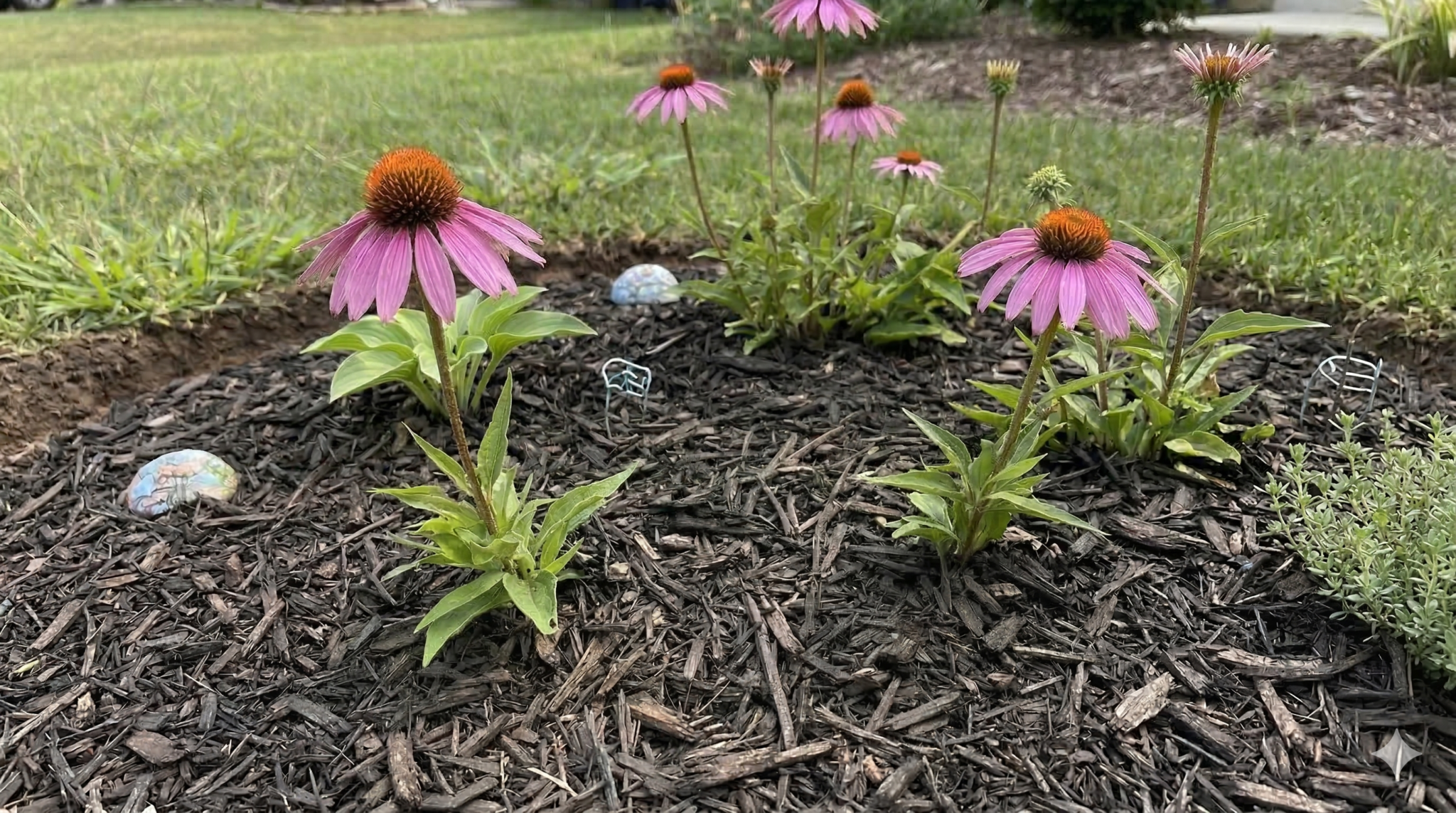
Native plants are adapted to the exact conditions Lincoln throws at them: heavy clay soils, summer drought, ice storms in April, and humidity spikes in July. Once established, they rarely need irrigation, fertilizer, or much intervention at all. That makes them a solid choice for any yard in Lincoln—not just for the ecological benefits, but for the practical ones.
This guide covers the species that consistently perform well in Lincoln landscapes, when and how to plant them, what they cost, and where to source them locally.
Why Native Plants Work in Lincoln’s Climate and Soils
Lincoln’s soil is predominantly heavy clay—sticky when wet, cracked and hard when dry. Most ornamental plants struggle with this. Native prairie species evolved in it. Their deep root systems (some reaching 10–15 feet) break up compaction over time, improve drainage, and build organic matter in the soil.
The city also averages about 28 inches of precipitation annually, with most of it falling in spring and early summer. Native plants are calibrated to this pattern. They push growth hard in spring, handle summer dry spells with stored moisture in deep roots, and go dormant naturally before winter.
From an air quality standpoint, Lincoln’s Air Pollution Control Program encourages low-maintenance landscaping that reduces fuel-powered equipment use. A native yard, once established, cuts down dramatically on mowing, blowing, and chemical applications—all of which contribute to local emissions.
Best Native Grasses for Lincoln, NE Yards
Native grasses are the backbone of any Nebraska landscape. They provide year-round structure, winter interest, and habitat for birds and beneficial insects.
Big Bluestem (Andropogon gerardii)
Nebraska’s state grass and the dominant species of the original tallgrass prairie. Big bluestem reaches 4–6 feet by late summer and turns a deep burgundy-copper in fall. It’s exceptionally drought tolerant once established—typically after the first full growing season—and handles Lincoln’s clay without complaint.
Plant in full sun. Divide clumps every 3–4 years to prevent center dieback. Cost: $6–$12 per plug, $18–$30 per 1-gallon container at local nurseries.
Little Bluestem (Schizachyrium scoparium)
Little bluestem tops out at 2–3 feet, making it better suited to smaller yards or front borders than big bluestem. The fall color is arguably more striking—a vivid orange-red that holds through most of winter. It also performs well on the drier, poorer soils you’ll find on slopes and south-facing beds in Lincoln.
Tolerates drought extremely well. Avoid heavy clay pockets with poor drainage—this is one native that prefers soils that aren’t fully saturated. Cost: $5–$10 per plug, $15–$25 per 1-gallon container.
Sideoats Grama (Bouteloua curtipendula)
This is Nebraska’s official state grass (alongside big bluestem) and a good choice for low-maintenance turf alternatives or meadow edges. It stays shorter than the bluestems—typically 18–24 inches—and produces distinctive seed heads that hang in a single row along the stem.
Ideal for hot, dry spots where other plants give up. Full sun. Cost: $5–$9 per plug.
Native Wildflowers for Lincoln, Nebraska Gardens
Nebraska’s native wildflowers are built for the same conditions as the grasses. Most are perennials that come back reliably for decades with minimal care. They also provide critical pollinator resources from April through October.
Purple Coneflower (Echinacea purpurea)
The most recognizable Nebraska native, and for good reason. Purple coneflower blooms from June through August, tolerates drought and clay equally well, and self-seeds reliably without becoming aggressive. Leave the seed heads through winter—goldfinches and other finches work them over from October through February.
Grows 2–4 feet tall. Full sun to part shade. Divides easily every 3–4 years. Cost: $8–$14 per 1-gallon container; often available in flats of 18 for $45–$65 at wholesale nurseries.
Black-Eyed Susan (Rudbeckia hirta)
A Lincoln-area staple that blooms reliably in July and August when many other plants are struggling with summer heat. Black-eyed Susan handles the full range of Lancaster County soil types, from sandy loam in southeast Lincoln to the heavy clay you’ll find in most established neighborhoods.
Technically biennial or short-lived perennial, but self-seeds aggressively enough to act like a permanent fixture. Full sun. 1–3 feet tall. Cost: $6–$12 per 1-gallon container.
Wild Bergamot (Monarda fistulosa)
Wild bergamot (also called bee balm) blooms lavender-purple from late June into August and is one of the best native plants in Lincoln for attracting bumblebees, hummingbirds, and native bees. It spreads by rhizome and will colonize a bed over time, so give it room or plan to divide it annually.
More tolerant of clay and partial shade than most prairie natives. 2–4 feet tall. Cost: $8–$14 per 1-gallon container.
Prairie Blazing Star (Liatris pycnostachya)
One of the showiest summer-blooming natives in Nebraska. The bright purple flower spikes reach 3–5 feet and bloom top-down from July through September, which is the opposite of most flowers and makes for extended visual interest. Monarch butterflies, native bees, and swallowtails all use it heavily.
Full sun, tolerates dry clay well once established. Grows from corms—spring planting is easiest. Cost: $5–$8 per corm, $10–$16 per 1-gallon container.
Rattlesnake Master (Eryngium yuccifolium)
Unusual enough to be a conversation piece in any Lincoln yard. The yucca-like foliage is striking even before the globular white flower heads emerge in midsummer. Rattlesnake master is a specialist plant—it needs the well-drained portions of your yard, not the low spots that collect clay runoff.
3–5 feet tall. Full sun. Extremely drought tolerant once established. Cost: $10–$18 per 1-gallon container.
Native Shrubs for Lancaster County Landscapes
Native shrubs add structure, privacy, and four-season interest while providing nesting habitat and food sources that ornamental shrubs can’t match.
American Hazelnut (Corylus americana)
A multi-stemmed shrub that tops out at 8–12 feet and does well in the dappled shade of existing tree canopy—a condition that describes a lot of established Lincoln neighborhoods. Spring catkins are early-season pollen sources for native bees. The nuts feed squirrels, jays, and wild turkeys through fall.
Adaptable to clay. Full sun to part shade. Suckers to form colonies if left unmanaged. Cost: $20–$45 per 2-gallon container.
Leadplant (Amorpha canescens)
One of the most drought-tolerant native shrubs in Nebraska. Leadplant stays small—2–4 feet—with fine gray-green foliage and striking purple flower spikes in late June. It fixes nitrogen, making it a useful addition to prairie plantings and naturalized areas where soil fertility is low.
Full sun. Extremely deep taproot means it’s slow to establish but nearly indestructible once it is. Cost: $12–$22 per 1-gallon container.
Buttonbush (Cephalanthus occidentalis)
If you have a drainage problem in your Lancaster County yard—low spots that hold water after rain—buttonbush is the answer. It’s one of the few native shrubs that actively thrives in wet clay and seasonal flooding. Fragrant white globular flowers bloom July through August, and the seed heads persist into winter.
4–10 feet tall. Full sun to part shade. Tolerates standing water. Cost: $18–$35 per 2-gallon container.
Native Trees That Perform in Lincoln, NE
Nebraska’s native tree list is shorter than some states, but the species that do grow here are well worth planting. They’re adapted to the freeze-thaw cycles, late spring frosts, and wind exposure that claim imported ornamentals.
Bur Oak (Quercus macrocarpa)
The dominant tree of Nebraska’s original oak savanna, and still one of the most reliable shade trees you can plant in Lincoln. Bur oak is extraordinarily long-lived—specimens in Lancaster County date back 300+ years—and it handles clay soils, drought, and wind better than any introduced oak species.
Slow-growing but worth it. Expect 12–18 inches per year in good conditions. Full sun. Plant as a 2-inch caliper tree for best results. Cost: $150–$350 for a 2-inch caliper balled-and-burlapped specimen.
Eastern Redbud (Cercis canadensis)
Technically at its northern range limit in Lincoln, but native to eastern Nebraska and reliably cold-hardy in Zone 5b-6a when planted in a protected spot. The magenta flower display in early April—before the leaves emerge—is one of the best spring ornamental shows available from a native tree.
15–30 feet at maturity. Full sun to part shade. Plant on the south or east side of structures for winter wind protection. Cost: $60–$150 for a 1.5-inch caliper tree.
Riverbank Grape and Native Vines: A Note
Green ash (Fraxinus pennsylvanica) is native to Nebraska but is no longer a viable planting option due to emerald ash borer, which has reached Lancaster County. If you have existing ash trees, consult a certified arborist about treatment or removal. Don’t plant new ones.
When to Plant Native Plants in Lincoln, Nebraska
Nebraska’s planting windows are different from what you might find on a generic gardening calendar. Here’s what actually works in Lincoln:
- Spring (late April–early June): Best window for container-grown perennials and shrubs. Soil temps are rising, moisture is plentiful, and plants can establish before summer heat arrives. Aim for soil temps above 50°F consistently—Lincoln typically hits this in mid-to-late April.
- Fall (mid-September–October): Often the best time to plant prairie grasses and wildflowers from seed. Cool temps reduce transplant stress, and fall rain helps establishment. Plugs and container plants do well if planted 6+ weeks before hard frost.
- Dormant seeding (November–December): Intentionally seeding after the ground cools but before it freezes allows seed to cold-stratify naturally over winter and germinate in spring. Works well for wildflower mixes and native grasses.
- Summer (July–August): Possible for established container plants with irrigation, but stressful. Avoid bare-root planting during summer heat.
Establishment Care: The First Two Years
Native plants are not zero-maintenance from day one. The first two growing seasons require consistent watering while root systems establish. After that, most species can handle Lincoln’s dry periods on their own.
Watering During Establishment
Year one: water weekly during dry spells (less than 1 inch of rain in a week). Deep, infrequent watering is better than daily shallow watering—it encourages roots to go deeper. A slow drip for 30–60 minutes at the base of each plant is more effective than overhead sprinkler coverage.
Year two: water monthly during extended drought. Most native perennials are largely self-sufficient by the end of year two in Lincoln’s climate.
Weed Pressure and Mulching
The first summer is when weeds compete hardest with new natives. Apply 2–3 inches of shredded hardwood mulch around new plantings—but keep it off the crown of the plants. Pull weeds before they set seed. Once native plants fill in, they suppress most weeds themselves through canopy closure and allelopathic root chemistry.
In Lincoln, watch for bindweed, Canada thistle, and smooth brome—all aggressive invaders that can outcompete young native plantings if left unchecked.
Where to Buy Native Plants in Lincoln, NE
Sourcing matters. Plants grown from locally collected seed are genetically adapted to Lancaster County’s specific climate and are more likely to establish and persist. Look for “local ecotype” or “Nebraska ecotype” labeling when possible.
Local native plant sales are a cost-effective source for plugs and bare-root plants. The Nebraska Statewide Arboretum holds plant sales in spring and fall with species selected specifically for Nebraska growing conditions. The Prairie Plains Resource Institute in Aurora (about an hour from Lincoln) sells local ecotype seed mixes and plugs suited to Lincoln-area soils.
For landscape-scale installations, local landscape contractors with native plant expertise can source wholesale through regional nurseries. Expect wholesale pricing to be 30–50% below retail for large orders.
Cost Overview for a Native Plant Landscape in Lincoln
Project costs vary widely depending on bed size, plant density, and whether you hire a contractor or DIY. Here’s a realistic breakdown for a Lincoln homeowner:
- Seed-based meadow conversion (per 1,000 sq ft): $150–$400 in materials. Add $400–$800 for site prep and seeding labor if hired out.
- Plug planting (prairie garden, 200 sq ft): $300–$600 in plant materials. Labor for installation adds $400–$700 depending on contractor.
- Mixed shrub border (100 linear feet): $800–$1,800 in plant materials. Full installation with mulch: $2,000–$4,500.
- Single native tree (bur oak, installed): $300–$700 including planting and initial watering.
Native landscapes typically cost comparable to traditional landscaping upfront, but significantly less to maintain over time. No annual replanting, reduced irrigation, and little to no fertilizer or pesticide cost after establishment.
Common Questions About Native Plants in Lincoln, NE
Will Lincoln’s HOA allow native plantings?
It depends on the HOA and the planting style. Formal native gardens—with defined edges, mulched beds, and clearly intentional design—are less likely to generate complaints than unmowed meadow areas. Some Lincoln HOAs have specific language about lawn height and “weedy” plantings. Check your covenants and consider starting with a defined border bed rather than a full turf replacement.
Do native plants attract more insects and pests?
Yes—and that’s the point. Native plants support the full insect food web, including predatory insects that keep pest populations in check. A well-established native planting actually tends to have fewer pest outbreaks than conventional landscapes, because the natural system of checks and balances is intact.
Can native plants be used in a formal or maintained landscape?
Absolutely. Purple coneflower, little bluestem, blazing star, and redbud all work in traditional landscape designs. The key is choosing species that fit your design intent and spacing them appropriately. Native plants don’t require a wild or naturalistic aesthetic to function well.
Working with what Lincoln’s Landscape Already Knows
The plants covered here didn’t arrive in Lincoln—they’re from Lincoln. They evolved alongside the same clay soils, the same summer droughts, and the same hard winters you’re dealing with in your yard. That’s an advantage no amount of irrigation or soil amendment fully replaces.
If you’re adding native plants to an existing landscape, start with a small bed of coneflower, little bluestem, and blazing star and see how your yard responds. If you’re planning a larger native conversion, a consultation with a Lancaster County landscape professional who specializes in Nebraska natives will save time and money in the long run.
The establishment period requires patience, but by year three, most homeowners report that their native plantings are the lowest-maintenance parts of their landscape by a wide margin.
EXCELLENTTrustindex verifies that the original source of the review is Google. Priority did a great job. Would recommend to anyonePosted onTrustindex verifies that the original source of the review is Google. Bryce was awesome from the design meeting throughout the project. Very professional and a great job on my new grill area on THANKSPosted onTrustindex verifies that the original source of the review is Google. Posted onTrustindex verifies that the original source of the review is Google. Posted onTrustindex verifies that the original source of the review is Google. Excellent, quality work. Very professional, knowledgeable, and skilled.! Excited to work with this company in the future!Posted onTrustindex verifies that the original source of the review is Google. Huge shoutout to Bryce and the whole Priority team who came out last week. Bryce was super helpful in figuring out the drainage issue we had going on and really gave us a good idea of what to expect and how it could be fixed. Also the quote was incredibly reasonable compared to many others we talked to. They did a great job getting the drainage done and we are already seeing a big difference in our yard. They also were awesome getting everything cleaned up. The biggest thing was how awesome they were to my 6 year old. He was so interested with what was going on, and they let him get involved and help out. For like 4-5 hours he was out there moving dirt and "helping." Hopefully it was not too much of a bother. Anyways, thanks a ton to the Bryce and his team!Posted onTrustindex verifies that the original source of the review is Google. We are so pleased with the results of our landscaping project. Bryce provided us with invaluable suggestions, detailed (and reasonable) pricing estimates, and a timely schedule. His crew was very professional and attentive to last minute changes. Thank you!Posted onTrustindex verifies that the original source of the review is Google. I am so happy with Priority One! In just a few weeks, our yard is healthy, green, and growing! Our shrubs are beautifully thriving and trimmed. I am so excited for our landscaping project to begin very soon! Great customer service, attention to detail and knowledgeable! Thank you!Posted onTrustindex verifies that the original source of the review is Google. Great service and quick response when we need somethingPosted onTrustindex verifies that the original source of the review is Google. They did the job exactly as promised and cleaned up nicely when finished. Well pleased.Verified by TrustindexTrustindex verified badge is the Universal Symbol of Trust. Only the greatest companies can get the verified badge who has a review score above 4.5, based on customer reviews over the past 12 months. Read more
About the Author
