
Drought-Tolerant Landscape Ideas for Lincoln Homes
Last summer, Lincoln hit 100°F on nine separate days. The city issued voluntary water restrictions by mid-July, and plenty of lawns across south Lincoln turned brown by August.
If you spent that stretch dragging sprinklers around or watching your water bill climb past $150 a month, you already know the problem.
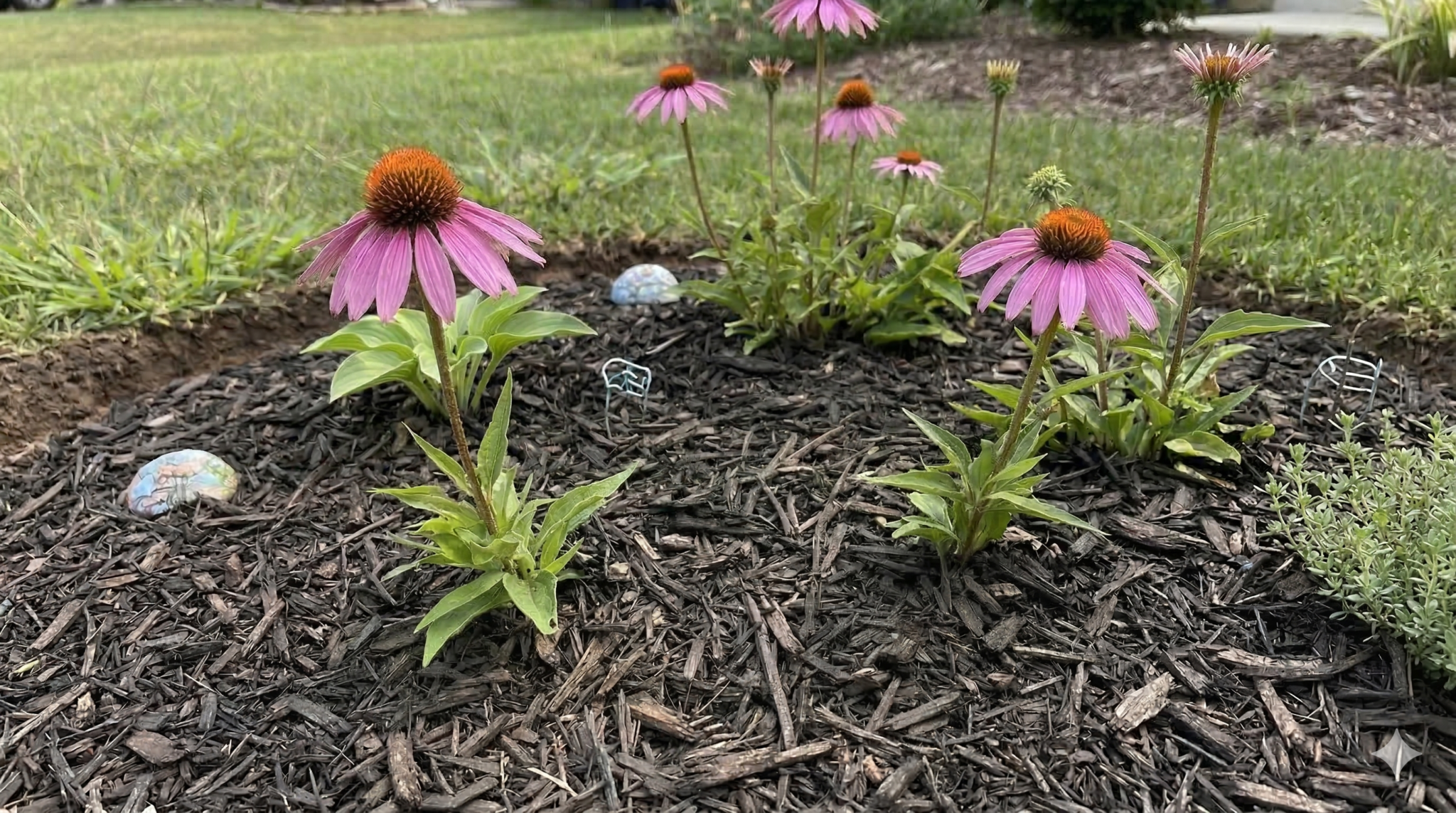
Drought-tolerant landscaping isn’t about ripping out your grass and dumping gravel everywhere. It’s about choosing plants, materials, and irrigation methods that actually match Lincoln’s climate—Zone 5b with heavy clay soil, 28 inches of annual rainfall, and temperature swings from -10°F in January to 105°F in July.
At Priority Lawn and Landscape, we’ve been installing drought-tolerant landscapes across Lancaster County for years. This guide covers what we’ve seen work (and fail) in Lincoln yards.
Why Lincoln Yards Need Drought-Tolerant Plants
Lincoln sits in a transition zone between the humid East and the semi-arid Great Plains. That means we get enough rain most years to keep a lawn alive—but the rain comes unevenly. April and May are typically wet. June can go either way. July and August are almost always dry, with stretches of 95°F+ heat that stress cool-season grasses like Kentucky bluegrass to their breaking point.
The bigger issue is the soil. Most of Lincoln—especially neighborhoods south of O Street and throughout the newer developments near Pioneers Boulevard and south toward Hickman—sits on heavy clay. Clay holds moisture when it’s wet, but it also cracks and hardens when it dries out. That combination punishes shallow-rooted plants and makes traditional sprinkler schedules wasteful. Water pools on the surface, runs off into storm drains, and never reaches the root zone.
Drought-tolerant plants Lincoln NE homeowners can rely on are species that root deep, tolerate clay, and survive three or four weeks without supplemental water once established. That’s the standard we use when recommending plants to clients.
Best Drought-Tolerant Plants for Lincoln, NE
Not every “drought-tolerant” plant sold at the garden center will perform in Lincoln. Zone 5b means winter lows can reach -15°F to -10°F, which kills plants rated for Zone 6 or warmer. And many xeriscape staples from Colorado or the Southwest need sharper drainage than our clay provides.
Here’s what actually holds up in Lincoln landscapes, sorted by category.
Native Perennials That Handle Nebraska Heat
Nebraska native plants evolved in this exact climate, so they’re your safest bet. They also support local pollinators, which matters if you care about your tomato garden producing.
Purple coneflower (Echinacea purpurea) is the classic pick—deep taproots, blooms June through September, and self-seeds without getting aggressive. Pair it with black-eyed Susan (Rudbeckia hirta) for a color combination that lasts all summer with zero irrigation after the first year.
Little bluestem (Schizachyrium scoparium) is the native grass to consider if you want something taller than turf. It turns copper-red in fall and holds its structure through winter. It looks especially good in mass plantings along fence lines or as a border between your maintained lawn and a naturalized area.
Other strong performers for Lincoln clay soil: butterfly milkweed (Asclepias tuberosa), prairie dropseed (Sporobolus heterolepis), blue wild indigo (Baptisia australis), and yarrow (Achillea millefolium). All are rated for Zone 4 or colder and tolerate clay once established.
Ornamental Grasses for Low-Water Landscapes
Ornamental grasses are the backbone of most drought-tolerant designs we install in Lincoln. They add movement, texture, and year-round interest without the water demands of a traditional perennial border.
Karl Foerster feather reed grass (Calamagrostis x acutiflora ‘Karl Foerster’) is our most-installed grass. It stays upright and columnar, reaches about 5 feet with plumes, and handles Lincoln clay without complaint. It’s one of the few ornamental grasses that looks tidy enough for a front yard next to a more formal landscape.
Blue fescue (Festuca glauca) works well as a low border plant—12 to 18 inches tall with blue-silver foliage. It does need decent drainage, so if your soil is pure clay, amend the planting area with compost or plant it on a slight slope.
Switchgrass (Panicum virgatum) is another Nebraska native that reaches 4 to 6 feet. The ‘Shenandoah’ cultivar turns wine-red by midsummer. Heavy Rain and Northwind are more upright selections that work well as privacy screens or to soften a fence line.
Drought-Tolerant Shrubs for Foundation and Border Plantings
Shrubs are where a lot of Lincoln homeowners waste water, usually because the builder installed hydrangeas or boxwood that need consistent moisture. Replacing thirsty foundation shrubs with drought-tolerant alternatives is one of the highest-impact changes you can make.
Ninebark (Physocarpus opulifolius) is native, hits 6 to 8 feet, and handles anything Lincoln throws at it. The ‘Diablo’ cultivar has dark burgundy foliage that contrasts well against a light-colored house. ‘Center Glow’ offers orange-gold new growth. Both are maintenance-free once established.
Blue Arctic willow (Salix purpurea ‘Nana’) stays compact at 3 to 4 feet with silver-blue foliage. It handles clay, drought, and even some road salt spray, which makes it useful along driveways and sidewalks.
For an evergreen option, consider juniper. Juniperus chinensis ‘Sea Green’ stays around 4 to 6 feet tall with arching branches. It’s one of the toughest evergreen shrubs you can plant in Lancaster County—no irrigation, no spraying, and it stays green through February.
Ground Covers to Replace Thirsty Lawn Areas
Replacing turf grass with drought-tolerant ground covers in areas where grass struggles—steep slopes, south-facing strips, tree root zones—is one of the smartest water-saving moves for any Lincoln property.
Creeping thyme (Thymus serpyllum) handles foot traffic, blooms purple in June, and smells good when you walk on it. It needs at least 6 hours of sun and average to lean soil. In heavy clay, incorporate 2 to 3 inches of compost before planting.
Sedum (stonecrop) is nearly indestructible once rooted. Dragon’s Blood and Angelina are two cultivars that do well in Lincoln. They spread to fill gaps, tolerate the heat radiating off south-facing foundations, and need almost no supplemental water.
Buffalo grass (Bouteloua dactyloides) is the native turf alternative. It goes dormant and turns tan during drought instead of dying, then greens up with the next rain. It only reaches 4 to 6 inches tall and needs mowing once or twice a season at most. It’s the best option for homeowners who want a lawn look without the water bill. One drawback: it doesn’t green up until late May in Lincoln, so you’ll stare at brown turf longer in spring than with bluegrass.
Designing a Drought-Tolerant Landscape for Lincoln Properties
Hardscaping and Permeable Surfaces
Hardscaping reduces the total planted area that needs water, but the material choice matters in Lincoln. Standard concrete patios and driveways create runoff that overwhelms storm drains during heavy spring rains—and the city of Lincoln’s stormwater management guidelines encourage permeable alternatives for that reason.
Permeable pavers allow rainwater to filter through joints and into the ground, recharging soil moisture that your drought-tolerant plants can draw on later. A permeable paver patio in Lincoln typically costs $18 to $28 per square foot installed, compared to $12 to $18 for standard poured concrete. The extra cost pays back through lower irrigation needs and, depending on your lot, reduced stormwater fees.
Gravel and decomposed granite work well for pathways and utility areas. Local limestone gravel is the most cost-effective option at $2 to $5 per square foot for material plus installation. It also blends naturally with Nebraska’s landscape.
Mulch beds around plantings are critical. A 3-inch layer of hardwood mulch reduces soil moisture evaporation by up to 70% and keeps clay soil from crusting over. In Lincoln, plan on refreshing mulch annually—our freeze-thaw cycles and spring rains break it down faster than in milder climates.
Smart Irrigation for Drought-Tolerant Landscapes
Even drought-tolerant plants need water during their first growing season. After that, the goal is supplemental irrigation only during extended dry spells—not a daily schedule.
Drip irrigation is the most efficient method for planted beds. It delivers water directly to the root zone and eliminates the evaporation loss from overhead sprinklers. A drip system for a typical Lincoln front yard bed runs $800 to $2,000 installed, depending on the number of zones and emitters.
If you’re keeping some lawn areas, a smart controller (like Rachio or Hunter Hydrawise) adjusts watering based on local weather data. These controllers pull real-time data from Lincoln weather stations and skip watering after rain events. A smart controller swap on an existing irrigation system costs $200 to $400 for the unit and installation.
One thing we tell every client: water deeply and infrequently. In Lincoln clay, that means running each zone for 15 to 20 minutes, then waiting 30 minutes for the water to soak in, then running again. Two sessions per watering day, two days per week maximum. This pushes roots down instead of encouraging the shallow root systems that die in drought.
Soil Preparation for Lincoln Clay
You cannot talk about drought-tolerant landscaping in Lincoln without addressing the clay. Lancaster County clay soil typically has a pH between 6.8 and 7.4, which is fine for most plants. The problem is the structure—compacted, slow to drain, and prone to cracking.
The best amendment is compost, worked 6 to 8 inches deep into planting beds. This doesn’t change the clay into something it’s not—it improves the structure enough that roots can penetrate and water can infiltrate instead of ponding. For an average 200-square-foot planting bed, plan on 2 to 3 cubic yards of compost at $30 to $45 per yard from local suppliers like Organics Recycling in Lincoln.
Do not add sand to clay soil. This is a persistent myth. Sand plus clay creates something close to concrete. Add organic matter instead.
A soil test through the UNL Extension Lancaster County office costs about $25 and tells you exactly what your soil needs. It’s worth the money before you invest in a landscape renovation.
Seasonal Maintenance for Drought-Tolerant Landscapes in Lincoln
One of the biggest advantages of drought-tolerant landscaping is reduced maintenance. But “low maintenance” doesn’t mean “no maintenance.” Here’s the annual schedule we recommend to our Lincoln clients.
Spring (March–May)
- Cut back ornamental grasses to 4 to 6 inches before new growth emerges in mid-March. If you wait too long, new shoots get tangled with old stems.
- Divide perennials that have outgrown their space. Early April is ideal in Lincoln—the ground has thawed but plants haven’t put on much top growth yet.
- Apply 2 to 3 inches of fresh mulch to all planting beds after the soil has warmed. Mulching too early traps cold and delays root growth.
- Check drip irrigation lines for frost damage. Lincoln’s freeze-thaw cycles crack emitters and split tubing. Run each zone and walk the lines before you need them.
- Pull cool-season weeds (henbit, chickweed, dandelion) before they set seed. A thick mulch layer prevents most of these, but edges and gaps still need attention.
Summer (June–August)
- Water deeply once per week during dry spells—twice per week maximum. Established drought-tolerant plants should not need water unless Lincoln goes more than 2 to 3 weeks without rain.
- Deadhead spent blooms on coneflowers and black-eyed Susans to encourage rebloom. Or leave them for goldfinches—they’ll strip the seed heads clean by September.
- Monitor for Japanese beetles in late June through July. They love roses and lindens but generally leave native plants alone. Hand-picking is more effective than beetle traps, which actually attract more beetles to your yard.
- Avoid heavy pruning of shrubs during peak heat. If ninebark or juniper needs shaping, do light trimming only and wait for fall to do major cuts.
Fall (September–November)
- September through mid-October is the best planting window in Lincoln. Soil is still warm, fall rains are usually reliable, and plants have time to establish roots before the ground freezes in November.
- Leave ornamental grass seed heads standing through winter. They add visual interest and provide food and shelter for birds.
- Blow out irrigation systems before the first hard freeze—typically late October to early November in Lincoln. A professional blowout runs $60 to $100 and prevents cracked pipes.
- Apply a final round of mulch to beds that have thinned during the growing season, especially around new plantings that need extra freeze protection.
Winter (December–February)
- Brush heavy snow off evergreen shrubs and ornamental grasses to prevent breakage. Wet Nebraska snow in March is the most common cause of split junipers.
- Plan any spring landscape projects now. Contractors book up fast once the ground thaws—if you wait until April to call, you may not get on a schedule until June.
- Review your water bills from the past year. Compare summer months before and after your drought-tolerant installation to track actual savings.
What Does Drought-Tolerant Landscaping Cost in Lincoln?
The cost varies widely based on the scope of the project. Here are realistic ranges for Lincoln based on projects we’ve completed in the last two years.
A small front-yard renovation—removing existing landscaping, amending soil, installing drought-tolerant plants and mulch in a 300- to 500-square-foot area—typically runs $2,500 to $5,000. That includes plant material, compost, mulch, and labor.
A full front-and-back yard overhaul with hardscaping elements (paver patio, gravel pathways, retaining wall), a drip irrigation system, and extensive plantings ranges from $10,000 to $30,000+ depending on material choices and property size.
Individual cost components to budget for:
- Drought-tolerant perennials: $8 to $25 per plant in 1-gallon containers
- Ornamental grasses: $12 to $35 per plant in 1- to 3-gallon containers
- Shrubs: $25 to $75 per plant in 3- to 5-gallon containers
- Mulch (installed): $75 to $120 per cubic yard
- Compost amendment (installed): $50 to $80 per cubic yard
- Drip irrigation: $800 to $2,000 per zone
- Permeable pavers: $18 to $28 per square foot installed
- Gravel pathways: $5 to $12 per square foot installed
Most Lincoln homeowners see a return on water savings within 3 to 5 years, depending on how much turf they replace. A typical household that reduces irrigated lawn area by 50% saves $300 to $600 annually on summer water bills.
Questions to Ask Before Starting a Drought-Tolerant Landscape Project
Before you hire anyone—including us—ask these questions to make sure you’re getting a design that works for Lincoln conditions.
- What Zone 5b-rated plants are you recommending, and have you installed them locally? Experience with Lincoln clay matters more than what a catalog says.
- How will you address soil drainage? Any contractor who skips the soil discussion is going to install plants into unammended clay, and you’ll have dead plants by August.
- What’s your plan for the establishment period? New drought-tolerant plantings still need regular water for the first growing season. A good contractor includes an irrigation plan for year one.
- Can you show me local projects you’ve completed? Drive by a few. See how they look after a full Nebraska summer.
- What’s your warranty on plant material? Most reputable Lincoln landscapers offer a one-year plant warranty with proper watering.
Ready to Cut Your Water Bill and Keep Your Yard Looking Good?
Priority Lawn and Landscape has been helping Lincoln homeowners design and install drought-tolerant landscapes that hold up through Nebraska summers. We know which drought-tolerant plants work in Lincoln NE clay soil, how to set up irrigation systems that don’t waste water, and how to design a yard that looks better in three years than it does the day we install it.
If you’re tired of fighting the sprinkler schedule every July, let’s talk about what a drought-tolerant landscape would look like on your property. Contact us for a free on-site consultation. We’ll walk your yard, look at your soil and sun exposure, and give you an honest recommendation on where drought-tolerant design makes sense—and where it doesn’t.
EXCELLENT Based on 26 reviews
 Posted on Google
 Kelsey SlausonPosted on Google
 Amy JensenThank you Priority Lawn for taking care of my yard! I had lots of weeds and unwanted plants growing throughout my yard. I had contacted a few other places and found that they only spray weeds and do not dig them up. What a disappointment! Not only did Priority Lawn take care of them all they did a fantastic job!Posted on Google
 RyanPriority did a great job. Would recommend to anyonePosted on Google
 David MattinglyBryce was awesome from the design meeting throughout the project. Very professional and a great job on my new grill area on THANKSPosted on Google
 Barbara AndersonPosted on Google
 Alex SwiatekPosted on Google
 Diane HudsonExcellent, quality work. Very professional, knowledgeable, and skilled.! Excited to work with this company in the future!Posted on Google
 Tahner PHuge shoutout to Bryce and the whole Priority team who came out last week. Bryce was super helpful in figuring out the drainage issue we had going on and really gave us a good idea of what to expect and how it could be fixed. Also the quote was incredibly reasonable compared to many others we talked to. They did a great job getting the drainage done and we are already seeing a big difference in our yard. They also were awesome getting everything cleaned up. The biggest thing was how awesome they were to my 6 year old. He was so interested with what was going on, and they let him get involved and help out. For like 4-5 hours he was out there moving dirt and "helping." Hopefully it was not too much of a bother. Anyways, thanks a ton to the Bryce and his team!Posted on Google
 Sonja KroppWe are so pleased with the results of our landscaping project. Bryce provided us with invaluable suggestions, detailed (and reasonable) pricing estimates, and a timely schedule. His crew was very professional and attentive to last minute changes. Thank you!Posted on Google
 KIM KingI am so happy with Priority One! In just a few weeks, our yard is healthy, green, and growing! Our shrubs are beautifully thriving and trimmed. I am so excited for our landscaping project to begin very soon! Great customer service, attention to detail and knowledgeable! Thank you!Verified by TrustindexTrustindex verified badge is the Universal Symbol of Trust. Only the greatest companies can get the verified badge who has a review score above 4.5, based on customer reviews over the past 12 months. Read more
About the Author
