
Fall Landscape Prep: Get Your Lincoln Yard Ready for Winter
Fall is the most important season for your lawn and landscape in Lincoln, NE. What you do between September and mid-November determines how your yard comes out of winter. Skip fall prep, and you’ll spend twice the effort (and money) catching up in spring.
Lincoln’s climate doesn’t ease you into winter gently. We go from 80-degree days in September to hard freezes by late October, and the ground can lock up solid by December. That compressed timeline means fall landscaping tasks need to happen in the right order, at the right time.
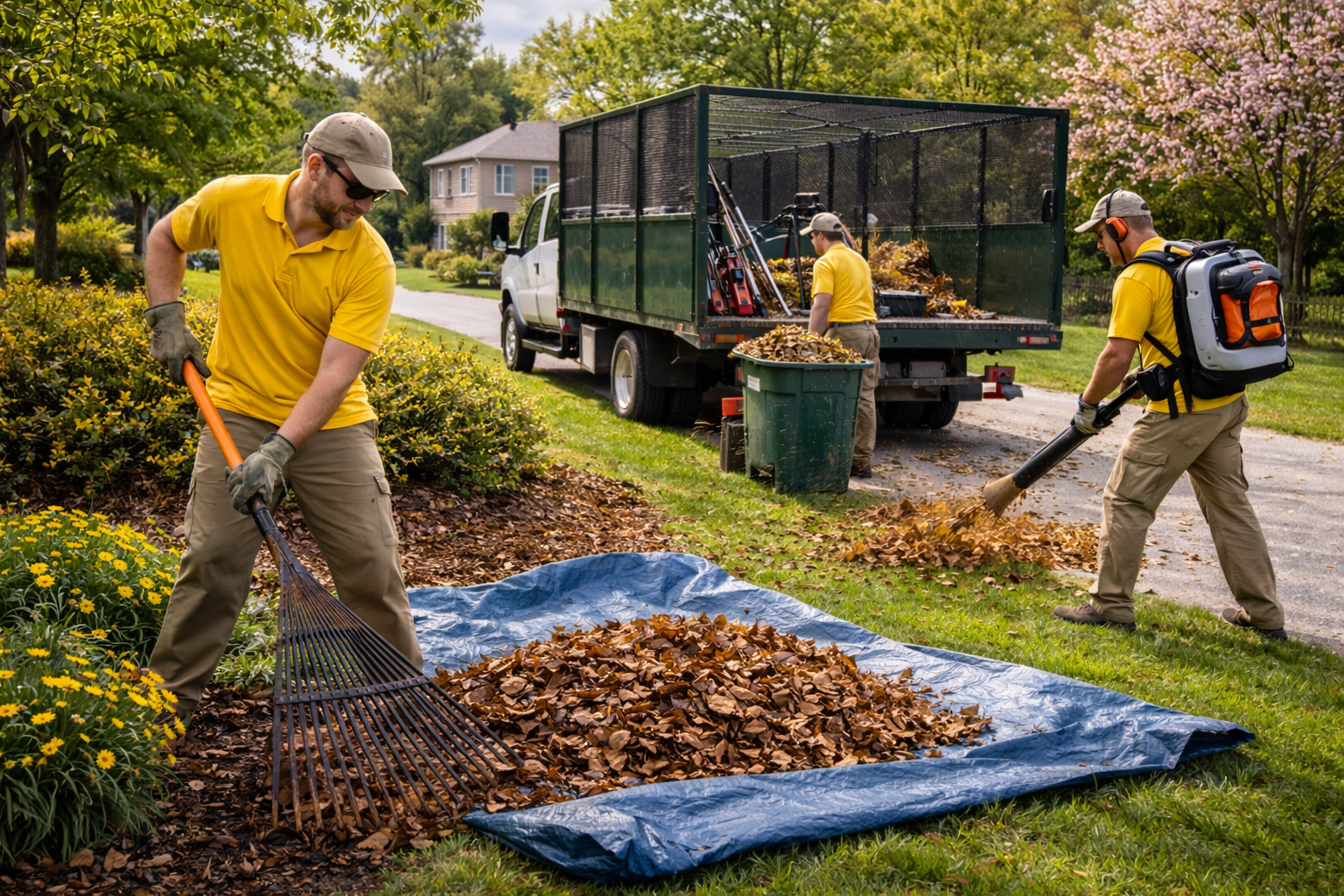
Here’s what Lincoln homeowners need to do — and when — to winterize their landscape properly.
Lincoln’s Fall Landscaping Timeline
Every task on this list is driven by temperature, not the calendar. But Lincoln’s weather patterns are predictable enough to build a general schedule:
- Early September: Core aerate, overseed, apply starter fertilizer to new seed
- Mid-September to early October: Divide perennials, plant trees and shrubs, transplant anything that needs to move
- Early to mid-October: Apply final fertilizer to established lawn, begin leaf management, plant spring-flowering bulbs
- Late October to early November: Winterize irrigation system, cut back select perennials, apply winter mulch to beds
- Mid-November: Final mow (drop height to 2.5 inches), clean and store equipment, wrap vulnerable plants
Lincoln’s average first frost hits around October 10–15, and the first hard freeze (below 28°F) usually follows within a couple of weeks. Plan your schedule around those benchmarks, and adjust if the forecast says otherwise.
Fall Aeration and Overseeding
If spring is the second-best time to aerate and overseed in Lincoln, fall is the best — by a wide margin. Soil temperatures in September are still warm enough for seed germination (55–65°F is ideal), but air temperatures have cooled off, reducing stress on new seedlings. You also dodge the crabgrass pressure that makes spring overseeding tricky.
Why Fall Works Better
Cool-season grasses — tall fescue and Kentucky bluegrass, the two workhorses of Lincoln lawns — germinate and establish fastest in fall conditions. The seedlings get 6–8 weeks of active growth before the ground freezes, then resume root development in early spring before summer stress arrives. That head start is the difference between thin, patchy turf and a lawn that fills in dense.
How to Do It Right
Core aerate first, then overseed immediately after. The aeration holes give seed direct soil contact, and the plugs left on the surface break down and provide a light topdressing. For tall fescue, seed at 6–8 lbs per 1,000 sq ft for overseeding. Kentucky bluegrass is lighter — 2–3 lbs per 1,000 sq ft — but germinates slower (14–21 days vs. 7–10 for fescue).
Apply a starter fertilizer at seeding time. Look for something with a higher phosphorus middle number (like a 16-22-8 or similar). This supports root establishment, which is the whole point of fall seeding.
Keep newly seeded areas consistently moist — not soaked — for the first 2–3 weeks. In Lincoln’s fall climate, you may not need to water much if September rains cooperate, but don’t count on it. Some years September is bone-dry.
Professional aeration and overseeding in Lincoln runs $150–$300 for a typical residential yard (5,000–8,000 sq ft), depending on seed quality and whether the service includes starter fertilizer.
Fall Fertilization
This is the single most impactful thing you can do for an established lawn in Lincoln. A late-season fertilizer application — often called a “winterizer” — feeds root growth and carbohydrate storage heading into dormancy. The result shows up in spring: lawns that got a proper fall feeding green up faster, thicker, and with fewer weed problems.
Timing and Rates
Apply your final fertilizer in mid- to late October, after the grass has stopped producing significant top growth but while the roots are still active. In Lincoln, that window typically falls between October 10 and November 1, depending on the year.
Use a slow-release nitrogen source at 1 lb of actual nitrogen per 1,000 sq ft. Avoid quick-release nitrogen this late — it pushes tender top growth that’s vulnerable to freeze damage. Potassium (the third number in the fertilizer ratio) is also valuable in fall applications. It strengthens cell walls and improves cold tolerance. A ratio like 24-2-14 or similar works well for Lincoln’s fall conditions.
One important note: Lincoln’s stormwater regulations apply year-round. Keep fertilizer off sidewalks, driveways, and streets. Blow or sweep any granules that land on hard surfaces back onto the lawn. Nutrient runoff into Lincoln’s stormwater system contributes to water quality issues downstream.
A professional fall fertilizer application in Lincoln runs $50–$90 for an average-sized yard.
Leaf Management
Lincoln is full of mature trees — oaks, maples, elms, hackberries, lindens — and they all drop leaves at once in October. Ignoring leaf cover is one of the fastest ways to damage a lawn heading into winter.
Why It Matters
A thick mat of wet leaves smothers turf, blocks light, traps moisture, and creates ideal conditions for snow mold and other fungal diseases. If leaves sit on your lawn through November and get packed down by rain or early snow, you’ll see the damage clearly in spring: dead patches, thinned areas, and fungal scarring.
The Right Approach
You don’t have to bag every leaf. Mulch-mowing light leaf cover works fine — run over the leaves with your mower until the pieces are small enough to filter down into the turf canopy. This actually adds organic matter to Lincoln’s clay soil over time. The key word is “light.” If you can’t see grass blades through the leaf layer, it’s too heavy to mulch in place.
For heavier leaf cover, remove leaves from the lawn and either compost them or use them as mulch in landscape beds. Shredded leaves make excellent winter mulch — free and effective.
Lincoln offers curbside leaf pickup from mid-October through late November (exact dates vary by year and neighborhood zone). Keep leaf piles in the street gutter, not on the sidewalk, and don’t pile them over storm drains.
Winterize Your Irrigation System
This is non-negotiable in Lincoln. Water left in irrigation lines, valves, and backflow preventers will freeze, expand, and crack components. A single winter without proper blowout can cause hundreds or thousands of dollars in repair costs come spring.
When to Blow Out
Schedule your irrigation winterization for late October to early November — after you’ve finished watering but before sustained freezing temperatures arrive. In Lincoln, the sweet spot is usually the last week of October through the first week of November, though warm falls can push this later.
What’s Involved
A professional blowout uses compressed air (at 50–80 PSI, depending on the system) to force water out of every line, head, and valve. Each zone gets run until no more water exits the heads. The backflow preventer is drained and the shut-off valve is closed.
Do not attempt this with a shop compressor from your garage. Residential compressors rarely produce the volume (measured in CFM) needed to clear an irrigation system properly, and too much pressure can damage PVC fittings and poly pipe.
Professional irrigation winterization in Lincoln costs $65–$125 depending on the number of zones. Most companies book up fast in October, so schedule early — ideally by mid-September.
Backflow Preventer Protection
Lincoln requires backflow prevention devices on all irrigation systems. These are the most freeze-vulnerable component because they sit above ground. After blowout, open the test cocks at a 45-degree angle to allow any residual water to drain. Some homeowners wrap their backflow preventer with insulated covers — these are cheap ($15–$30) and worth it, especially during early cold snaps before the ground freezes solid.
Tree and Shrub Care
Fall is the best planting season for trees and shrubs in Lincoln — better than spring, actually. The soil is still warm, which encourages root growth, but air temperatures have dropped, so the plant isn’t trying to support leaf growth and root development simultaneously.
Fall Planting Window
Plant from mid-September through mid-October for best results. This gives new plantings 4–6 weeks of root establishment before the ground freezes. Container-grown and balled-and-burlapped stock both work well for fall planting in Lincoln.
Good fall-planting choices for Lincoln’s Zone 5b climate include bur oak, Kentucky coffeetree, hackberry, honeylocust, serviceberry, viburnum, and ninebark. Avoid planting marginally hardy species in fall — they need the full growing season to establish before facing their first Lincoln winter.
Watering New Plantings
New trees and shrubs need consistent moisture through fall, right up until the ground freezes. Don’t assume that because air temps have cooled down, the plant doesn’t need water. Roots are still active in warm soil even after leaves drop. Water deeply once a week through October and into November if conditions are dry. A slow trickle from a hose at the base for 20–30 minutes is more effective than a quick spray.
Pruning Timing
Fall is generally not the time for major pruning in Lincoln. Most deciduous trees and shrubs are best pruned in late winter (February–March) when they’re fully dormant and disease pressure is lowest. The exceptions:
- Dead, damaged, or hazardous branches: Remove these any time of year. Safety doesn’t wait for a calendar.
- Spring-flowering shrubs (lilac, forsythia, viburnum): Prune right after they finish blooming in spring, not in fall. Fall pruning removes next year’s flower buds.
- Oak trees: Do not prune oaks from April through October in Nebraska. Oak wilt is present in the state, and the beetles that spread it are active during warm months. Late fall (after hard freeze) or winter pruning is safest.
Professional tree pruning in Lincoln runs $200–$800 per tree depending on size, species, and access. Large removals can exceed $1,500–$3,000.
Perennial Bed Prep
Not every perennial needs to be cut back in fall. Some benefit from the structure — both for winter interest and to protect the crown from freeze-thaw damage. Others should absolutely come down before winter.
Cut Back in Fall
Hostas (once they yellow and collapse), daylilies, iris (cut foliage to 4–6 inches to reduce iris borer habitat), bee balm, and phlox. Diseased foliage — anything with powdery mildew, leaf spot, or rust — should be removed and disposed of, not composted. Leaving diseased plant material over winter just gives the fungal spores a head start in spring.
Leave Standing Through Winter
Ornamental grasses (Karl Foerster, switchgrass, little bluestem), coneflower, black-eyed Susan, and sedum. These provide winter structure, catch snow for insulation, and feed birds through the cold months. Cut them back in late March or early April before new growth begins.
Winter Mulch
After the ground freezes (usually late November in Lincoln), apply 3–4 inches of mulch over perennial beds. The purpose isn’t to keep plants warm — it’s to keep soil temperature consistent and prevent the freeze-thaw heaving that pushes shallow-rooted perennials out of the ground. Shredded leaves, straw, or wood mulch all work. Pull it back gradually in spring as temperatures warm.
Marginally hardy plants — lavender, certain hybrid tea roses, butterfly bush — benefit from extra protection. Mound mulch over the crown 6–8 inches deep after the first hard freeze.
Lawn Care: Final Mow and Weed Control
Drop Your Mowing Height
Throughout the growing season, you’ve been mowing at 3–3.5 inches — the right height for tall fescue and bluegrass in Lincoln’s summer heat. For your last one or two mows of the season, gradually lower the deck to 2.5 inches.
Why? Taller grass going into winter is more susceptible to snow mold, a fungal disease that thrives under snow cover on matted, overly long turf. Lincoln gets enough snow most winters to make this a real concern, especially in shaded areas and north-facing slopes where snow lingers.
Don’t go below 2 inches, though. Scalping the lawn damages crowns and exposes soil to winter erosion.
Fall Weed Control
Fall is actually more effective than spring for controlling broadleaf weeds like dandelions, clover, and henbit. These perennial weeds are actively pulling nutrients down into their root systems in fall, which means they’re also pulling herbicide into the roots — exactly where you want it.
Apply a broadleaf herbicide (2,4-D or triclopyr-based products work well) in mid-September through mid-October, when daytime temperatures are still above 50°F. Don’t spray when frost is expected within 24 hours — the plant needs to be actively metabolizing for the product to work.
A professional fall weed control application in Lincoln runs $50–$80 for an average yard.
Hardscape Winterization
Lincoln’s freeze-thaw cycles are brutal on patios, walkways, and retaining walls. A little fall maintenance goes a long way toward preventing expensive spring repairs.
Paver Maintenance
Sweep polymeric sand into any joints where it’s settled or washed out over the summer. Top off joints before winter — empty joints allow water to penetrate the base, freeze, and heave pavers out of alignment. A bag of polymeric sand runs $15–$25 and covers 50–75 sq ft of joints depending on paver size and joint width.
Check for any pavers that have already shifted, settled, or cracked. It’s easier to pull and re-level individual pavers now than to deal with a section that’s heaved 2 inches by March.
Concrete and Natural Stone
Seal concrete patios and walkways if they haven’t been sealed in the last 2–3 years. A quality concrete sealer ($30–$60 per gallon, covers 200–400 sq ft) prevents water from penetrating the surface, freezing, and causing spalling — that flaking, pitting damage you see on older Lincoln driveways and sidewalks.
Clean and seal natural stone surfaces the same way. Flagstone and limestone are porous and particularly vulnerable to freeze-thaw damage if water saturates the stone before a hard freeze.
Retaining Walls
Inspect retaining walls for any new lean, bulge, or displacement. Small movements in fall can become structural failures after a winter of freeze-thaw cycles and saturated soil. Make sure weep holes and drainage behind walls are clear — blocked drainage is the number-one cause of retaining wall failure in Lincoln’s heavy clay soil.
Protect Outdoor Living Features
Fire Pits
Clean out ash and debris. If you have a gas fire pit, shut off the gas supply and disconnect the line if it’s accessible. For wood-burning pits, cover with a fitted cover or tarp to keep water out. Standing water that freezes in a fire pit can crack stone, concrete, and fire brick.
Outdoor Kitchens
Shut off and drain water supply lines to outdoor sinks. Winterize any plumbing the same way you would irrigation — water in lines will freeze and burst. Disconnect and store propane tanks (store upright, outdoors, not in a garage or enclosed space). Cover countertops and appliances with fitted, breathable covers — not plastic tarps, which trap moisture and promote mildew.
Patio Furniture
Store cushions indoors or in a dry, ventilated space. Wipe down metal frames with a protectant to prevent rust. Teak and cedar furniture can stay out but benefits from a coat of protective oil before winter. Stack or store lightweight furniture that could blow around in Lincoln’s winter winds — 50+ mph gusts aren’t unusual between November and March.
Drainage: Fix It Before the Ground Freezes
If you’ve noticed drainage problems during the growing season — pooling water, soggy areas, water flowing toward your foundation — fall is your last chance to fix them before the ground freezes and the issue gets worse.
Lincoln’s clay soil doesn’t drain well in the best conditions. Add saturated fall soils, freeze-thaw expansion, and spring snowmelt to the equation, and minor drainage issues become major problems fast.
What to Address Now
Regrade any areas where soil has settled away from the foundation. You need a minimum 1-inch-per-foot slope away from the house for the first 6 feet. Lincoln’s clay soil settles and compacts over time, and many homes lose positive drainage grade within a few years of construction.
Clean out French drains and catch basins. Check that downspout extensions are directing water at least 4–6 feet from the foundation. Make sure window well covers are in place and sealed — window wells that fill with water and ice are a common cause of basement leaks in Lincoln homes.
A professional drainage assessment in Lincoln typically runs $100–$250. Repair costs vary widely, but regrading a problem area might cost $500–$1,500, while installing a new French drain runs $25–$60 per linear foot.
Equipment Storage and Maintenance
Mower
Run the fuel tank dry or add fuel stabilizer before storage. Change the oil, clean or replace the air filter, and sharpen the blades. Storing a mower with old fuel is the top reason for hard starts in spring. A fall service that includes all of this runs $75–$125 at most Lincoln shops — and there’s no wait, unlike the spring rush.
String Trimmers and Blowers
Same fuel rules apply. Clean air filters, inspect trimmer line heads for wear, and store in a dry space. Battery-powered equipment should be stored with batteries at 40–60% charge in a temperature-controlled area — not a freezing garage.
Hand Tools
Clean soil off shovels, rakes, and pruners. Sharpen cutting edges. Wipe metal surfaces with an oily rag to prevent rust. Hang tools rather than leaning them in a corner where moisture collects. Ten minutes of fall tool maintenance saves replacement costs and frustration in spring.
Your Fall Landscaping Action Plan
Fall landscaping in Lincoln, NE is about preparation, not decoration. Aerate and overseed in September. Plant trees and shrubs while the soil is warm. Fertilize one last time in October. Manage leaves before they smother the turf. Winterize irrigation before the freeze hits. Protect hardscape, beds, and outdoor features. Fix drainage before the ground locks up.
Get these things done in the right sequence, and your yard will come through winter in strong shape. Skip them, and you’ll be playing catch-up all spring — spending more time and more money to get back to where you could have been.
Priority Lawn and Landscape helps Lincoln, NE homeowners with fall lawn care, landscape winterization, hardscaping, and seasonal maintenance throughout Lancaster County. Reach out to schedule your fall services before the freeze hits.
EXCELLENT Based on 26 reviews
 Posted on Google
 Kelsey SlausonPosted on Google
 Amy JensenThank you Priority Lawn for taking care of my yard! I had lots of weeds and unwanted plants growing throughout my yard. I had contacted a few other places and found that they only spray weeds and do not dig them up. What a disappointment! Not only did Priority Lawn take care of them all they did a fantastic job!Posted on Google
 RyanPriority did a great job. Would recommend to anyonePosted on Google
 David MattinglyBryce was awesome from the design meeting throughout the project. Very professional and a great job on my new grill area on THANKSPosted on Google
 Barbara AndersonPosted on Google
 Alex SwiatekPosted on Google
 Diane HudsonExcellent, quality work. Very professional, knowledgeable, and skilled.! Excited to work with this company in the future!Posted on Google
 Tahner PHuge shoutout to Bryce and the whole Priority team who came out last week. Bryce was super helpful in figuring out the drainage issue we had going on and really gave us a good idea of what to expect and how it could be fixed. Also the quote was incredibly reasonable compared to many others we talked to. They did a great job getting the drainage done and we are already seeing a big difference in our yard. They also were awesome getting everything cleaned up. The biggest thing was how awesome they were to my 6 year old. He was so interested with what was going on, and they let him get involved and help out. For like 4-5 hours he was out there moving dirt and "helping." Hopefully it was not too much of a bother. Anyways, thanks a ton to the Bryce and his team!Posted on Google
 Sonja KroppWe are so pleased with the results of our landscaping project. Bryce provided us with invaluable suggestions, detailed (and reasonable) pricing estimates, and a timely schedule. His crew was very professional and attentive to last minute changes. Thank you!Posted on Google
 KIM KingI am so happy with Priority One! In just a few weeks, our yard is healthy, green, and growing! Our shrubs are beautifully thriving and trimmed. I am so excited for our landscaping project to begin very soon! Great customer service, attention to detail and knowledgeable! Thank you!Verified by TrustindexTrustindex verified badge is the Universal Symbol of Trust. Only the greatest companies can get the verified badge who has a review score above 4.5, based on customer reviews over the past 12 months. Read more
About the Author
