
Container Plantings in Lincoln, NE
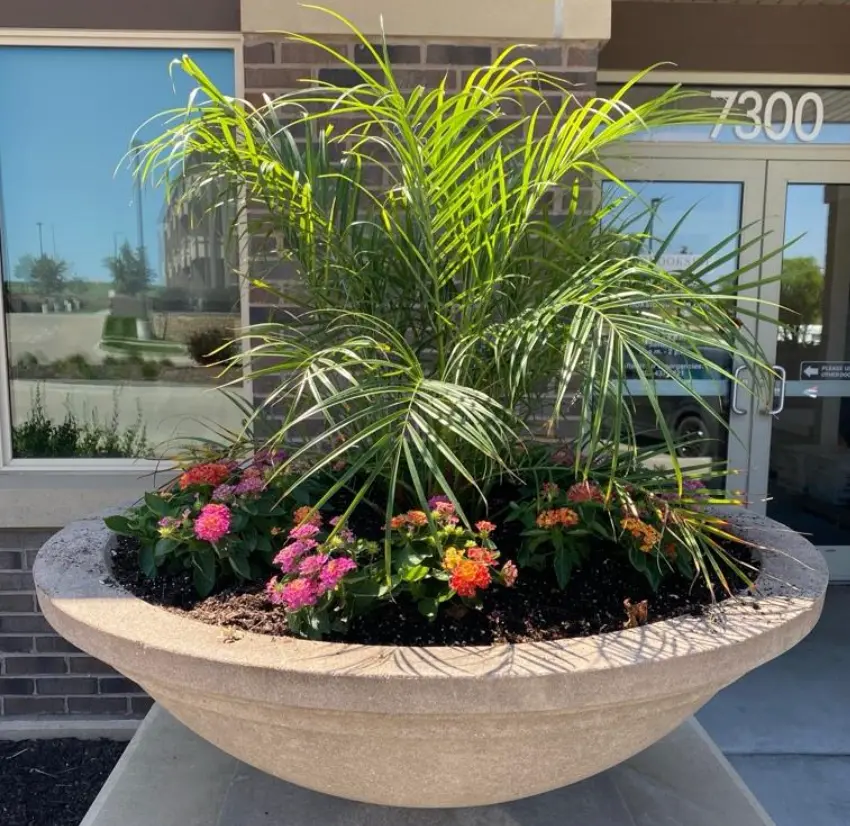
Empty pots flanking a front door say something. So do pots stuffed with half-dead petunias in October. Container plantings are one of the fastest ways to upgrade the look of a building — and one of the most visible things to let slip when no one is managing them.
Priority Lawn and Landscape handles container plantings for homes, offices, retail, restaurants, and multi-tenant properties throughout Lincoln and Lancaster County. We install, maintain, and refresh your planters on a four-season schedule, so there’s never a dead stretch out front.
Why Container Plantings Matter More Than People Think
Curb appeal isn’t a soft metric. It shows up in the numbers.
- Shoppers spend up to 12% more at businesses in areas with quality landscaping.
- 70% of first-time sales decisions are influenced by curb appeal before a customer ever walks in.
- Seasonal planting strategy can boost customer engagement by up to 22%.
- Buildings with quality landscaping, including container plantings, command roughly 7% higher rental rates.
For a restaurant, a law firm, a dental office, or a leasing office, the pots at your entrance are doing marketing work whether you planned it or not. The question is whether they’re helping or hurting.
Our Four-Season Container Program
Most container planting services think in terms of “spring and fall.” That leaves your pots empty — or worse, full of dead material — for months at a time. We run a true four-season rotation built around what actually thrives in Lincoln’s Zone 5b–6a climate.
You can sign up for all four seasons, or pick just the ones that matter most to you. Plenty of our clients do two or three. Here’s how each season works:
1. Spring Pansies — Late March to Mid-to-Late May
Pansies go in as soon as the ground is workable, usually in late March. They handle Nebraska’s unpredictable early-spring swings — frost one night, 70 degrees the next — better than almost anything else. Color starts showing the moment the snow is gone, which is exactly when you want your entrance to wake up.
They’ll carry the planters through April and into mid-to-late May, then get swapped out before the heat takes them down.
2. Summer Annuals — Mid-May Through Late August or Frost
Once nighttime temperatures stay above 50°F, we pull the pansies and install summer annuals. This is the showiest season — full, lush, high-impact combinations built for visibility and staying power through Nebraska heat.
Common picks include combinations of vinca, calibrachoa, lantana, sweet potato vine, coleus, angelonia, and dracaena spikes for height. We design each pot around sun exposure, water access, and the look of the building — not off a one-size-fits-all template.
Summer plantings generally run through late August. If the fall weather holds, we can stretch them closer to first frost.
3. Fall Planters — Late August Through Frost
Late August is when summer annuals start looking tired. We swap them for fall combinations built around garden mums, ornamental kale and cabbage, pansies (they’re back — they love cool weather), ornamental grasses, and accents like pumpkins or gourds where it fits the space.
Fall planters tend to be the crowd favorite for restaurants and retail during the back-to-school and Halloween seasons. They’ll hold up through the first hard freezes, which in Lincoln typically land in mid-to-late October.
4. Winter Planters — Thanksgiving Through Winter
Our winter planters use fresh-cut live greenery — not plastic, not sprayed-on color. That means real fir, pine, cedar, and spruce tips, with accents like birch branches, red twig dogwood, pinecones, berries, and seasonal ribbon.
The practical result: your entrance smells like Christmas every time someone walks by. That’s a detail people remember, and it’s something artificial greenery can’t fake.
Winter planters go in around Thanksgiving and hold their color and structure through the cold months. Because the greenery is cut and the temperatures are low, they’re essentially self-preserving until spring.
Pick the Seasons That Make Sense for You
Not every property needs all four rotations. Some of our clients only want the summer and winter installs. Some want pansies, summer, and fall but skip winter. Some — usually higher-profile commercial properties — run the full four-season program because the entrance is always on display.
We’ll walk the property with you, look at the pots you have (or recommend new ones if yours are undersized or in rough shape), and build a schedule around what your space and budget actually call for.
What’s Included in Our Container Planting Service
- Design consultation. We look at sun exposure, sight lines, building colors, and traffic patterns before we spec plants.
- Plant sourcing. We bring commercial-grade plant material — larger, healthier, and more established than what you’d find in a typical garden center.
- Installation. Old material out, fresh potting mix or top-dress as needed, new design in, cleanup done.
- Seasonal swaps. We show up on schedule. You don’t have to remember when pansies need to come out or when the summer stuff is about to fade.
- Maintenance options. Watering, deadheading, and mid-season refreshes are available as add-ons, which matter most for summer installs during heat waves.
Who We Do This For
Container planting work across Lincoln tends to fall into a few groups:
- Restaurants and retail — where the planters are doing real marketing work at the front door.
- Office buildings and multi-tenant properties — where landscape budgets are tied to rental rates and tenant retention.
- Medical, dental, and professional offices — where first impressions are part of how patients and clients judge the practice.
- Homeowners — usually people with front porches, large entryways, or patios where good container work changes how the whole house reads.
Why Local Matters for This Work
Container plantings in Nebraska have to handle conditions that national templates don’t account for — late April hailstorms, 100-degree July afternoons, dry winter wind that desiccates evergreen cuttings, and the clay-heavy soil many Lincoln properties sit on (which matters when pots are set directly on beds).
We live and work here. The plant material we use, the install timing, and the rotation schedule are all built around Lincoln’s climate — not a generic Midwest playbook.
Get Your Property on the Schedule
Spring install slots fill up first. If you want pansies in your pots the last week of March, the time to lock in your schedule is before the snow is fully off the ground.
Contact Priority Lawn and Landscape for a walk-through and a quote. We’ll look at your pots, ask what you’re trying to accomplish, and put together a season-by-season plan — whether that’s one install a year or all four.
EXCELLENT Based on 26 reviews
 Posted on Google
 Kelsey SlausonPosted on Google
 Amy JensenThank you Priority Lawn for taking care of my yard! I had lots of weeds and unwanted plants growing throughout my yard. I had contacted a few other places and found that they only spray weeds and do not dig them up. What a disappointment! Not only did Priority Lawn take care of them all they did a fantastic job!Posted on Google
 RyanPriority did a great job. Would recommend to anyonePosted on Google
 David MattinglyBryce was awesome from the design meeting throughout the project. Very professional and a great job on my new grill area on THANKSPosted on Google
 Barbara AndersonPosted on Google
 Alex SwiatekPosted on Google
 Diane HudsonExcellent, quality work. Very professional, knowledgeable, and skilled.! Excited to work with this company in the future!Posted on Google
 Tahner PHuge shoutout to Bryce and the whole Priority team who came out last week. Bryce was super helpful in figuring out the drainage issue we had going on and really gave us a good idea of what to expect and how it could be fixed. Also the quote was incredibly reasonable compared to many others we talked to. They did a great job getting the drainage done and we are already seeing a big difference in our yard. They also were awesome getting everything cleaned up. The biggest thing was how awesome they were to my 6 year old. He was so interested with what was going on, and they let him get involved and help out. For like 4-5 hours he was out there moving dirt and "helping." Hopefully it was not too much of a bother. Anyways, thanks a ton to the Bryce and his team!Posted on Google
 Sonja KroppWe are so pleased with the results of our landscaping project. Bryce provided us with invaluable suggestions, detailed (and reasonable) pricing estimates, and a timely schedule. His crew was very professional and attentive to last minute changes. Thank you!Posted on Google
 KIM KingI am so happy with Priority One! In just a few weeks, our yard is healthy, green, and growing! Our shrubs are beautifully thriving and trimmed. I am so excited for our landscaping project to begin very soon! Great customer service, attention to detail and knowledgeable! Thank you!Verified by TrustindexTrustindex verified badge is the Universal Symbol of Trust. Only the greatest companies can get the verified badge who has a review score above 4.5, based on customer reviews over the past 12 months. Read more