
Front Yard Landscaping Ideas to Boost Curb Appeal in Lincoln
Curb appeal isn’t just about selling a house. It’s what you see every time you pull into the driveway, what your neighbors see when they walk by, and — if we’re being honest — it’s a reflection of whether the property is being maintained or neglected. In Lincoln, NE, where neighborhoods range from century-old Near South bungalows to newer developments in south and southeast Lincoln, the front yard sets the tone for the entire property.
The good news: you don’t need a massive budget or a full tear-out to make a real difference. Some of the highest-impact curb appeal improvements in Lincoln cost a few hundred dollars and a weekend.
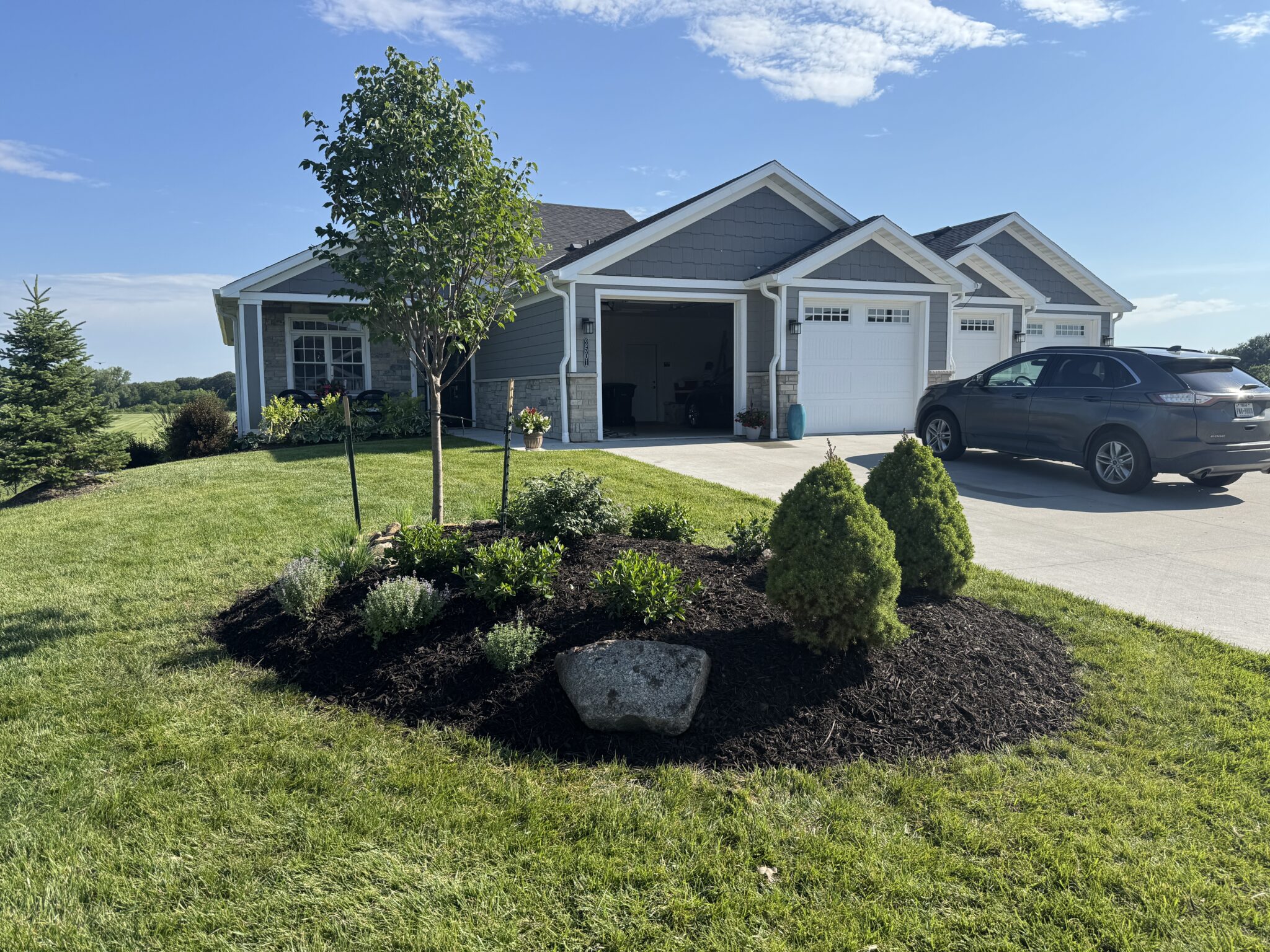
Others are bigger investments that pay off in property value and daily satisfaction for years.
Here’s what actually works for front yard landscaping in Lincoln — specific to our climate, soil, and the architectural styles common across the city.
Foundation Plantings: The Backbone of Curb Appeal
Foundation plantings are the shrubs, perennials, and small trees placed along the front of your house. Done right, they frame the home, soften hard edges, and create visual depth. Done wrong — or not done at all — the house looks like it’s sitting on a bare slab.
Most Lincoln homes built before the 1990s have overgrown yews, junipers, or arborvitae jammed against the foundation. These were fine when they were planted 30 years ago, but they’ve long since outgrown their space, blocked windows, trapped moisture against siding, and turned the front of the house into a dark green wall.
Design Principles That Work
Layer in three depths. Place taller shrubs (4–6 feet mature height) at the corners of the house and near the front door for vertical framing. Use mid-height shrubs (2–4 feet) along the main wall. Fill the front edge with low perennials and groundcovers. This creates a natural slope from the house outward that draws the eye and looks intentional.
Leave breathing room. Plant shrubs at least 3 feet from the foundation wall — more for larger species. Crowding plants against the house traps moisture, reduces air circulation, promotes rot and pest issues, and guarantees you’ll be pruning constantly. Check the mature width on the plant tag, not the size it is in the pot.
Repeat plants in odd-numbered groupings. Three of the same shrub creates rhythm and cohesion. One of everything creates a botanical collection, not a landscape. Stick to 3–5 species total for a front foundation bed. Simplicity reads as intentional; variety reads as cluttered.
Best Foundation Shrubs for Lincoln
These perform well in Zone 5b on Lancaster County’s clay soil and hold up to Lincoln’s temperature extremes:
- Panicle hydrangea (Limelight, Little Lime, Bobo): Blooms on new wood, so even harsh winters don’t kill the flower buds. Tolerates clay. Little Lime tops out around 3–5 feet — a great mid-layer plant. Bobo stays under 3 feet.
- Ninebark (Diablo, Coppertina, Little Devil): Bulletproof native shrub. Dark burgundy to copper foliage adds color contrast without flowers. Handles full sun, clay, drought, and neglect. Little Devil is a compact cultivar (3–4 feet) well-suited for foundation planting.
- Boxwood (Green Velvet, Green Mountain): The classic evergreen hedge plant. Provides winter structure when everything else is bare. Green Velvet stays compact (3–4 feet) and handles Lincoln winters without the bronzing that cheaper cultivars suffer.
- Arrowwood viburnum (Blue Muffin): Dense, compact (3–5 feet), native. White spring flowers, blue fall berries, burgundy fall color. Handles clay and partial shade.
- Dwarf Korean lilac (Miss Kim): Compact (4–5 feet), fragrant late-spring blooms, good fall color. Doesn’t sucker like common lilac.
Professional foundation planting for a typical Lincoln front yard (removing old plantings, soil amendment, new shrubs and perennials, mulch) runs $2,000–$6,000 depending on the size of the bed, plant sizes, and how much old material needs to come out.
Front Walkway and Entry Design
The path from the sidewalk or driveway to your front door is one of the most-used and most-visible features of your property. A cracked, narrow, or poorly routed concrete walkway drags down the entire front yard, no matter how good the plantings look.
Walkway Width
Most original builder-grade walkways in Lincoln are 3 feet wide. That’s too narrow. Two people can’t walk side by side, and it feels cramped. A 4-foot walkway is the minimum for a comfortable approach; 5 feet is better and reads as generous and welcoming.
Widening an existing concrete walkway is usually more expensive and less attractive than replacing it entirely. A paver or natural stone walkway in Lincoln runs $18–$35 per square foot installed, depending on materials. A 4-foot-wide, 30-foot-long walkway (120 sq ft) costs roughly $2,160–$4,200.
Material Options
Concrete pavers: The most popular choice in Lincoln for good reason. Durable, slip-resistant, available in a wide range of colors and patterns, and they handle freeze-thaw well when installed on a proper base. Holland pavers in charcoal or gray tones are the most common, but tumbled pavers give a more textured, aged look that suits older Lincoln homes.
Natural flagstone: Higher cost ($25–$45 per sq ft installed) but unmatched in character. Irregular shapes and natural color variation suit craftsman bungalows, mid-century ranches, and traditional homes. Set in mortar on a concrete base for a permanent installation, or dry-laid on a compacted gravel base for a more casual look.
Exposed aggregate or stamped concrete: A step up from plain broom-finished concrete at a moderate cost ($12–$20 per sq ft). Good for homeowners who want an upgrade without the premium of pavers or stone.
Entry Focal Points
The front door area is the visual anchor. A few targeted improvements here punch above their weight:
- Step and stoop upgrades: If you have a small concrete stoop with a wrought-iron railing, replacing it with a wider stone or paver landing immediately changes the feel of the entry. Adding a step width that matches the walkway creates visual continuity.
- Flanking planters or urns: A pair of large pots (18–24 inch diameter) on either side of the door with seasonal plantings adds polish. Cost: $50–$150 per pot plus plants, swapped out three times a year.
- House numbers: Oversized, modern house numbers mounted on siding or a post near the entry. A surprisingly high-impact upgrade for $30–$80.
Lawn Shape and Edges
A well-maintained lawn is still the foundation of curb appeal in most Lincoln neighborhoods. But the shape of the lawn — and how cleanly it’s defined — matters more than most people realize.
Clean Edges Make Everything Look Better
Crisp edges along beds, walkways, and driveways instantly make a yard look maintained, even if the lawn itself is average. A sharp bed edge created with a half-moon edger or power edger costs nothing but time and makes a dramatic visual difference.
Cut a clean V-shaped trench 3–4 inches deep along all bed borders. Maintain it through the season with a string trimmer. This single habit separates polished front yards from sloppy ones.
Rethink the Lawn Shape
Most Lincoln front yards are rectangular slabs of turf bordered by a narrow strip of foundation planting. That’s functional but not interesting. Introducing curved bed lines — sweeping arcs from the foundation out toward the sidewalk or driveway — adds visual movement and creates planting pockets that break up the monotony.
A landscape designer can lay out bed lines in an hour or two ($100–$200 for a consultation) and the difference in visual impact is significant. You don’t need to fill every new bed with expensive plantings right away — mulch and a few anchor shrubs are enough to start.
Lawn Alternatives for Problem Areas
Some spots in Lincoln front yards just won’t grow good turf. Heavy shade under mature oaks and maples, compacted strips between the sidewalk and street, dry areas under eaves, slopes that erode every time it rains. Instead of fighting these areas year after year, replace the turf with something better suited to the conditions:
- Dense shade: hosta, wild ginger, woodland sedge (Carex pensylvanica), sweet woodruff. These fill in under mature trees where bluegrass won’t survive.
- Hellstrip (sidewalk-to-street strip): ornamental grasses (blue fescue, prairie dropseed), creeping thyme, sedum. These tolerate heat, salt, foot traffic, and the compacted soil typical of Lincoln hellstrips.
- Dry shade under eaves: coral bells (Heuchera), barrenwort (Epimedium), bigroot geranium. Low-water plants that handle the rain shadow along foundations.
- Slopes: creeping juniper, Virginia creeper, or a native seed mix of sideoats grama and buffalo grass for a low-maintenance, erosion-resistant cover.
Trees for Front Yard Impact
A well-placed tree is the single highest-value landscape investment you can make. Mature trees add 7–15% to residential property values according to multiple studies, and in Lincoln’s summer heat, a shade tree on the south or west side of a house measurably reduces cooling costs.
Placement Matters
Don’t plant a tree where it’ll block the front of the house in 15 years. Most front yard trees should go to one side, framing the house rather than hiding it. Plant at least 15 feet from the foundation (more for large species) and at least 10 feet from sidewalks and driveways to prevent root heaving.
Check Lincoln’s right-of-way rules before planting in the strip between the sidewalk and street. Lincoln Parks and Recreation has a community forestry program that maintains a recommended tree list and may require approval for street-tree plantings.
Best Front Yard Trees for Lincoln
Shade trees (large, 40+ feet mature):
- Bur oak: The toughest native tree for Lincoln’s conditions. Massive, long-lived, drought-tolerant once established, handles clay. Slow-growing — plant it now and your grandkids will appreciate it.
- Kentucky coffeetree: Underused and well-adapted. Open canopy filters light nicely. Tolerates drought, alkaline clay, and urban conditions. No serious pest or disease issues in Nebraska.
- Honeylocust (thornless, podless cultivars like Shademaster): Fine-textured foliage, filtered shade, tolerates everything Lincoln throws at it. Widely planted but for good reason.
Ornamental trees (15–30 feet mature):
- Serviceberry (Autumn Brilliance): Multi-season interest — white spring flowers, edible berries, strong fall color. Native and well-adapted. Works as a single trunk or multi-stem.
- Japanese tree lilac (Ivory Silk): Blooms in June after other lilacs finish. Handles heat, clay, and urban stress. Tops out around 20–25 feet. Very common in Lincoln for good reason.
- Eastern redbud: Spectacular spring bloom on bare branches. Tolerates clay. Zone 5b is the edge of its range, so plant in a sheltered spot — south-facing, protected from northwest wind.
Expect to pay $300–$800 per tree installed for 1.5–2 inch caliper stock, the most common size for residential planting. Larger specimens (3–4 inch caliper) run $800–$2,000+ but provide faster impact.
Hardscape Features That Add Curb Appeal
Beyond walkways, several hardscape elements can elevate a front yard from ordinary to distinctive.
Retaining Walls and Terracing
Lincoln has plenty of properties with grade changes in the front yard — especially in older neighborhoods like Sheridan Boulevard, Country Club, and the Near South. A low retaining wall (1–3 feet) turns an awkward slope into a defined planting terrace and adds architectural interest.
Segmental retaining wall block is the most common material in Lincoln. Natural stone (limestone, fieldstone) costs more but blends better with older homes. Budget $20–$40 per square face foot installed for block, $35–$60 for natural stone.
Walls under 4 feet don’t typically require a building permit in Lincoln, but check with Lincoln Building and Safety if you’re close to that threshold or near a property line.
Decorative Borders and Edging
Upgrading from plastic edging or no edging to a permanent border transforms bed appearance. Options range from simple to high-end:
- Natural stone border: Irregular fieldstone or limestone pieces laid along the bed edge. $5–$12 per linear foot for materials. Suits traditional and craftsman-style homes.
- Brick soldier course: A single row of bricks set on edge along the bed. Classic look that works with most Lincoln architectural styles. $6–$10 per linear foot installed.
- Steel edging: Clean, modern look. Creates a razor-sharp line between turf and mulch. Cor-Ten steel develops a rust patina that looks intentional. $4–$8 per linear foot for materials.
Boulders and Accent Stone
Two or three well-placed boulders in a front bed add visual weight and permanence that plants alone can’t achieve. Use local limestone or granite — stone native to the region looks natural. A 2–3 foot boulder delivered and placed in Lincoln costs $100–$300 depending on size and source.
Avoid the “boulder lineup” — a row of identically sized rocks placed at even intervals looks artificial. Cluster boulders in odd numbers, partially bury them so they look like they’ve always been there, and plant around them.
Landscape Lighting
Outdoor lighting extends curb appeal past sundown and adds security. A well-lit front yard looks maintained and intentional. A dark one looks abandoned — even if the landscaping is beautiful by daylight.
Key Areas to Light
Uplighting on trees: A single well-placed in-ground uplight at the base of a mature tree creates dramatic nighttime structure. Use LED fixtures with a warm color temperature (2700K) to avoid the harsh, bluish look of older landscape lights.
Path lighting along the walkway: Low bollard or hat-style fixtures every 6–8 feet along the front walkway. These guide visitors to the door and define the path edges. Stagger fixtures on alternating sides for a natural look rather than a runway.
Accent lighting on the house: Wash lighting on the front facade, downlights under eaves, or small spots highlighting architectural features like columns, stonework, or a distinctive front door. Subtle is better — you’re creating atmosphere, not stadium lighting.
Address lighting: Illuminating house numbers improves visibility for visitors, delivery drivers, and emergency services.
Cost and Installation
A basic front yard lighting package in Lincoln (6–10 LED fixtures, transformer, wiring, professional installation) runs $1,500–$3,500. Higher-end brass or copper fixtures, smart controls, and more complex layouts push toward $4,000–$7,000.
Low-voltage LED landscape lighting uses minimal electricity — a typical front yard system costs $3–$8 per month to run. The fixtures last 40,000–50,000 hours, which means years of use before replacement.
Solar path lights from the hardware store are tempting but generally disappointing. They produce weak light, die after 1–2 seasons, and look cheap. If budget is tight, a few well-placed wired fixtures beat a dozen solar stakes.
Mulch, Color, and Seasonal Interest
Mulch
Fresh mulch is the single fastest curb appeal improvement in Lincoln. A clean 2–3 inch layer of hardwood mulch in front beds instantly makes the entire yard look maintained. It also suppresses weeds, retains moisture, and moderates soil temperature — practical benefits on top of the visual impact.
Stick to natural-toned hardwood mulch (brown or dark brown). Dyed red and black mulch fades unevenly, bleeds color onto sidewalks in rain, and looks artificial against most Lincoln homes. Bulk mulch runs $30–$50 per cubic yard. One yard covers about 100 sq ft at 3 inches deep. A typical Lincoln front yard needs 3–6 cubic yards.
Refresh mulch once a year in spring. Don’t pile new mulch on top of old year after year — that buildup suffocates plant roots and creates a moisture-trapping layer. Rake back old mulch, top off to 2–3 inches, and keep mulch pulled 3–4 inches away from plant stems and tree trunks.
Seasonal Color
Annual flowers add color that perennials and shrubs can’t match. A few strategically placed pockets of annuals — at the front entry, in pots on the stoop, at the mailbox — provide season-long color for a modest investment.
Spring (plant after May 5 in Lincoln): petunias, geraniums, calibrachoa, snapdragons. These handle Lincoln’s spring temperature swings.
Summer: zinnias, lantana, salvia, angelonia. Heat-tolerant and long-blooming through Lincoln’s July and August.
Fall: ornamental cabbage and kale, mums, pansies. These handle light frost and extend color into November.
Budget $100–$300 per season for annual color in a typical Lincoln front yard, depending on how many planting pockets you maintain.
Four-Season Interest
The best front yards in Lincoln look intentional in every season — not just June through September. Plan for winter structure by including:
- Evergreen shrubs (boxwood, dwarf spruce, juniper) for green through winter
- Ornamental grasses (Karl Foerster, little bluestem) for fall and winter texture
- Trees with interesting bark (river birch, paperbark maple) that stand out when leaves are gone
- Red or yellow twig dogwood for vivid winter stem color against snow
A front yard that looks thoughtful in January tells the neighborhood the property is cared for year-round.
Driveway and Parking Area
The driveway is the largest hardscape surface in most Lincoln front yards, and it’s easy to overlook. A stained, cracked, or heaving driveway undermines everything else you’ve done.
Concrete Maintenance
Most Lincoln driveways are poured concrete. Sealing every 2–3 years ($0.15–$0.25 per sq ft for DIY, $1–$3 per sq ft professional) prevents water penetration and reduces freeze-thaw spalling. Pressure-wash oil stains and surface grime in spring — a clean driveway reads as new even if it’s 20 years old.
Crack repair is worth doing before winter. Fill cracks wider than ¼ inch with flexible concrete caulk. Left unfilled, water enters, freezes, and expands the crack every winter cycle.
Driveway Border Plantings
Softening the driveway edges with a narrow planting strip (even 12–18 inches wide) makes a big difference. Low, tough plants work best here — they need to handle salt spray, reflected heat, and occasional tire encroachment. Daylilies, catmint (Walker’s Low), and Karl Foerster grass all handle driveway conditions in Lincoln.
Neighborhood Context: What Works in Lincoln
Lincoln’s neighborhoods have distinct characters, and the most effective front yard designs respond to that context rather than ignoring it.
Older neighborhoods (Near South, Country Club, Sheridan, Woods Park): These areas have mature street trees, established character, and often smaller lots. Foundation plantings that complement the home’s architecture — craftsman, Tudor, colonial — work best. Natural stone, cottage-garden perennials, and traditional materials suit the setting. Avoid ultra-modern designs that clash with the neighborhood’s historic feel.
Mid-century neighborhoods (South Lincoln, Meadowlane, Belmont): Ranch homes and split-levels dominate. These benefit from updated foundation plantings (replacing overgrown junipers with modern cultivars), clean bed lines, and simple, low-maintenance designs. A few bold plant choices — ornamental grasses, ninebark, panicle hydrangea — update the look without a full redesign.
Newer developments (southeast and south Lincoln, Fallbrook, Wilderness Hills, The Preserve): These typically have builder-grade landscaping — minimal foundation plants, sod to the property line, young trees. The opportunity here is to add layers: larger plant material, defined bed edges, landscape lighting, and hardscape accents that differentiate the property from every other house on the block.
Getting Started: Where to Spend First
If budget is limited, prioritize the improvements that deliver the most visual impact per dollar:
- Fresh mulch and clean bed edges — under $300 for most Lincoln front yards. Immediate transformation.
- Front entry upgrade — flanking pots, new house numbers, a fresh coat of paint on the front door. Under $200 total.
- Foundation planting refresh — remove overgrown shrubs, plant 5–7 new shrubs and a few perennial groupings. $1,000–$3,000 depending on scope.
- Walkway upgrade — the most expensive item on this list, but the one that changes the entire front approach. $2,000–$5,000 for pavers or stone.
- Landscape lighting — extends the impact of everything else into the evening. $1,500–$3,500 installed.
You don’t have to do everything at once. Start with mulch and edges this weekend, plan the planting refresh for this fall (the best planting season in Lincoln), and budget the walkway and lighting for next year. Phased improvement beats no improvement.
Priority Lawn and Landscape designs and installs front yard landscaping, hardscaping, and outdoor lighting for homeowners throughout Lincoln, NE and Lancaster County. Contact us for a curb appeal consultation or a quote on your front yard project.
EXCELLENT Based on 26 reviews
 Posted on Google
 Kelsey SlausonPosted on Google
 Amy JensenThank you Priority Lawn for taking care of my yard! I had lots of weeds and unwanted plants growing throughout my yard. I had contacted a few other places and found that they only spray weeds and do not dig them up. What a disappointment! Not only did Priority Lawn take care of them all they did a fantastic job!Posted on Google
 RyanPriority did a great job. Would recommend to anyonePosted on Google
 David MattinglyBryce was awesome from the design meeting throughout the project. Very professional and a great job on my new grill area on THANKSPosted on Google
 Barbara AndersonPosted on Google
 Alex SwiatekPosted on Google
 Diane HudsonExcellent, quality work. Very professional, knowledgeable, and skilled.! Excited to work with this company in the future!Posted on Google
 Tahner PHuge shoutout to Bryce and the whole Priority team who came out last week. Bryce was super helpful in figuring out the drainage issue we had going on and really gave us a good idea of what to expect and how it could be fixed. Also the quote was incredibly reasonable compared to many others we talked to. They did a great job getting the drainage done and we are already seeing a big difference in our yard. They also were awesome getting everything cleaned up. The biggest thing was how awesome they were to my 6 year old. He was so interested with what was going on, and they let him get involved and help out. For like 4-5 hours he was out there moving dirt and "helping." Hopefully it was not too much of a bother. Anyways, thanks a ton to the Bryce and his team!Posted on Google
 Sonja KroppWe are so pleased with the results of our landscaping project. Bryce provided us with invaluable suggestions, detailed (and reasonable) pricing estimates, and a timely schedule. His crew was very professional and attentive to last minute changes. Thank you!Posted on Google
 KIM KingI am so happy with Priority One! In just a few weeks, our yard is healthy, green, and growing! Our shrubs are beautifully thriving and trimmed. I am so excited for our landscaping project to begin very soon! Great customer service, attention to detail and knowledgeable! Thank you!Verified by TrustindexTrustindex verified badge is the Universal Symbol of Trust. Only the greatest companies can get the verified badge who has a review score above 4.5, based on customer reviews over the past 12 months. Read more
About the Author
