
Spring Landscaping Checklist for Lincoln, NE Homeowners
Lincoln lawns take a beating every winter. Between freeze-thaw cycles, heavy clay soil compaction, and the occasional ice storm, most yards in Lancaster County come out of March looking rough.
Here’s the good news: a solid spring landscaping plan can undo most of that damage and set your lawn and landscape up for the rest of the year’s growing season.
This checklist covers what Lincoln, NE homeowners actually need to do — and when — to get ahead of the curve before summer heat arrives.
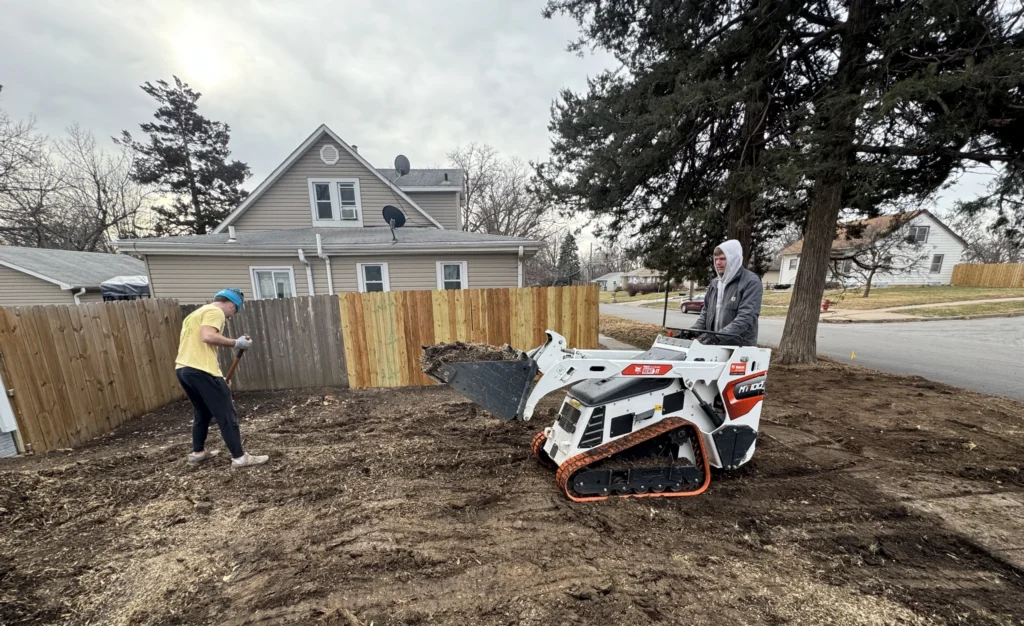
Timing Matters: Lincoln’s Spring Lawn Care Window
Spring lawn care in Lincoln, Nebraska doesn’t start on the calendar — it starts with soil temperature. Most of the critical early-season tasks hinge on when your soil consistently hits 50–55°F at a 4-inch depth. In a typical year around Lincoln, that happens somewhere between mid-March and early April, though late cold snaps can push things back.
Here’s a rough seasonal timeline based on Lincoln’s climate patterns:
- Mid-March to early April: Clean up debris, assess winter damage, sharpen and service mower
- Early to mid-April: First mow (set deck to 3–3.5 inches), apply pre-emergent herbicide, begin dethatching if needed
- Late April to mid-May: Core aerate, overseed thin areas, start planting perennials and shrubs
- Late May: Lay sod if needed, begin regular irrigation schedule, apply first round of fertilizer
Jumping the gun on fertilizer or seed is one of the most common mistakes we see. If soil temps aren’t there yet, you’re wasting product and money.
Lawn Assessment and Cleanup
Before you do anything else, walk your entire property. You’re looking for specific problems, not just general messiness.
What to Look For
Check for dead patches, which are common after heavy snow cover or ice buildup. Look for areas where the turf has thinned out — especially along sidewalks, driveways, and south-facing slopes that dry out fast. Note any spots where water pools after rain. That standing water issue won’t fix itself, and it’ll kill grass faster than drought will.
Pick up fallen branches, leaves that matted down over winter, and any debris that’s been smothering the turf. Rake lightly to break up any matted grass without tearing out healthy crowns. In Lincoln’s clay-heavy soil, compacted areas near foot traffic paths and around patios are almost guaranteed.
Mower Prep
Get your mower serviced before you need it — not the first warm Saturday when every shop in town has a two-week backlog. Sharpen or replace blades. Dull blades tear grass instead of cutting it, which stresses the plant and invites disease. A basic mower tune-up in Lincoln runs $50–$100 depending on the shop.
Soil Testing and Amendment
Lancaster County soil is predominantly clay with a pH that typically runs between 6.8 and 7.5. That’s workable for most turfgrasses, but you won’t know your specific situation without a soil test.
The UNL Extension in Lancaster County offers soil testing, and it’s one of the best $20–$30 you’ll spend all spring. The results tell you exactly what your soil needs — not what the bag at the hardware store guesses it needs.
Common Amendments for Lincoln Soil
Clay soil in this area tends to be low in organic matter and can run slightly alkaline. Based on what we typically see:
- Compost topdressing (¼ to ½ inch layer): Improves drainage, adds organic matter, feeds microbial life. This is the single best thing you can do for heavy clay soil over time.
- Sulfur (if pH is above 7.2): Lowers pH gradually. Apply according to test results — more isn’t better.
- Gypsum: Helps break up tight clay without changing pH. Useful for heavily compacted areas.
Skip the lime unless your test specifically shows low pH. Adding lime to already-alkaline Lincoln soil is a common and expensive mistake.
Core Aeration
If you do one thing for your lawn this spring, make it core aeration. Lincoln’s clay soil compacts aggressively, especially in high-traffic areas and anywhere heavy equipment or vehicles have been. Compacted soil chokes out root growth, reduces water infiltration, and creates the perfect conditions for weeds.
When and How
Aerate in late April or May when the grass is actively growing and can recover quickly. The soil should be moist but not waterlogged — a day or two after rain is ideal.
Use a core aerator, not a spike aerator. You want plugs of soil pulled out and left on the surface to break down. A single pass is fine for maintenance; double-pass in two directions for heavily compacted yards.
Rental costs for a core aerator in Lincoln run about $75–$100 for a half day. Professional aeration for an average-sized Lincoln yard (around 5,000–8,000 sq ft) typically costs $80–$175.
Pair It With Overseeding
Aeration and overseeding go together. The holes created by aeration give seed direct soil contact, which dramatically improves germination rates. For Lincoln lawns, tall fescue and Kentucky bluegrass blends do well in our Zone 5b conditions. Seed rates vary, but plan on 4–6 lbs per 1,000 sq ft for overseeding tall fescue.
Pre-Emergent Herbicide: Timing Is Everything
Crabgrass is the big one in Lincoln. It germinates when soil temperatures hit 55°F consistently for several days in a row. Once it sprouts, pre-emergent is useless — you’ve missed the window.
Most years in Lincoln, the ideal application window falls between early and mid-April. If you’re planning to overseed, you have a conflict: most pre-emergents prevent all germination, including your new grass seed. You can either skip pre-emergent in areas you’re overseeding, or use mesotrione (Tenacity), which allows grass seed germination while still controlling crabgrass.
A professional pre-emergent application in Lincoln typically runs $50–$80 per application for an average-sized yard. You’ll want a second application 6–8 weeks later for season-long control.
Spring Fertilization
Hold off on fertilizer until late May at the earliest. Early spring fertilization pushes top growth at the expense of root development — exactly the opposite of what your lawn needs after winter stress.
When you do fertilize, use a slow-release nitrogen source. For Lincoln’s clay soil, a rate of 0.75–1 lb of actual nitrogen per 1,000 sq ft is plenty for the first application. Going heavier contributes to thatch buildup and increases the risk of nutrient runoff into Lincoln’s stormwater system.
A four- to five-application fertilizer program for a Lincoln lawn runs roughly $200–$500 per season through a professional service, depending on yard size and product quality.
Irrigation System Startup
If you have an in-ground irrigation system, don’t just flip it on and hope for the best.
Spring Startup Checklist
Walk each zone while it runs. Look for heads that aren’t popping up, broken risers, or heads spraying sidewalks and driveways instead of turf. Check for leaks at connection points — freeze damage often cracks fittings underground, and you won’t see the water loss until your bill arrives.
Adjust run times for spring conditions. Established lawns in Lincoln need about 1–1.5 inches of water per week during the growing season, including rainfall. In spring, when temps are cooler and rain is more frequent, you’ll usually need much less supplemental irrigation.
Professional irrigation startups in Lincoln run $75–$125. If you had your system winterized professionally, the same company will often include the spring startup in their service agreement.
Landscape Bed Prep and Planting
Cleaning and Mulching
Pull back old mulch and clear out dead annuals, leaf litter, and any perennials that didn’t make it through winter. Cut back ornamental grasses to 4–6 inches before new growth starts — once green shoots appear, you risk cutting into live tissue.
Apply 2–3 inches of fresh mulch in beds, keeping it pulled back 3–4 inches from tree trunks and shrub bases. Volcano mulching — piling mulch up against trunks — causes rot and invites pests. It’s one of the most damaging and most common landscaping mistakes in the Lincoln area.
Bulk hardwood mulch in Lincoln runs roughly $30–$50 per cubic yard, depending on the supplier. One cubic yard covers about 100 sq ft at 3 inches deep.
What to Plant and When
Lincoln sits in USDA Hardiness Zone 5b, with some areas on the western edge of town trending toward 6a. That means your average last frost date falls around April 25–May 5, though late freezes into mid-May aren’t unusual.
Hardy perennials and shrubs (plant mid-April through May): coneflower, black-eyed Susan, daylily, Russian sage, Karl Foerster feather reed grass, hydrangea (both panicle and smooth types do well here), and viburnum. These handle Lincoln’s temperature swings and clay soil without much fuss.
Annuals (wait until after last frost, mid-May): petunias, marigolds, zinnias, salvia. Don’t rush these. One late freeze wipes out your investment.
Trees (plant in April or early May while dormant or just leafing out): bur oak, hackberry, Kentucky coffeetree, and honeylocust are all well-adapted to Lincoln’s conditions and are recommended by the Lincoln Parks and Recreation Department’s community forestry program.
For larger planting projects, expect to spend $50–$150 per shrub installed and $300–$800+ per tree depending on caliper size, species, and access.
Drainage and Grading Issues
Spring is when drainage problems become impossible to ignore. If water pools against your foundation, sits in low spots for more than 24 hours after rain, or flows toward your house instead of away from it, you need to address it now — not after the June thunderstorms hit.
Common Fixes
Regrading: Soil should slope away from your foundation at a minimum of 1 inch per foot for the first 6 feet. Many Lincoln homes, especially those built on the heavy clay common in south and southeast Lincoln, settle over time and lose that grade. A regrading project for one side of a house typically costs $500–$2,000 depending on access and scope.
French drains: A perforated pipe in a gravel-filled trench that intercepts and redirects subsurface water. Effective for persistently wet areas in yards with poor natural drainage. Lincoln’s clay soil actually makes French drains more necessary but also more effective, since the clay layer creates a natural barrier that directs water into the drain. Professional installation runs $25–$60 per linear foot.
Dry creek beds: Both functional and attractive, these handle surface water flow across a yard. They work well on properties with natural slope. Costs vary widely — $1,500–$5,000 depending on length and stone selection.
Downspout extensions: The simplest fix. Extend downspouts at least 4–6 feet from the foundation. Underground extensions tied to a pop-up emitter are cleaner than surface extensions and keep water well away from the house. Budget $150–$400 per downspout for underground installation.
Hardscaping: Patios, Walkways, and Retaining Walls
Spring is the best time to schedule hardscape work in Lincoln. Contractors are booking out, and the ground conditions are right for proper base preparation. If you’ve been thinking about a patio, walkway, or retaining wall, getting on a contractor’s schedule in April or May means your project gets done before the summer rush.
What to Know About Hardscaping in Lincoln
Lincoln’s freeze-thaw cycle is hard on hardscape. Any patio or walkway needs a proper base — minimum 6 inches of compacted Class 5 gravel for most applications, sometimes more depending on soil conditions. Skipping or skimping on the base is the number-one reason patios heave and crack within a few years.
Paver patios in Lincoln typically cost $18–$30 per square foot installed, including base preparation. A 300 sq ft patio runs roughly $5,400–$9,000. Natural stone costs more — $25–$45 per square foot — but holds up well and ages nicely.
Retaining walls under 4 feet don’t usually require a permit in Lincoln, but anything taller does, and you’ll want an engineered design. Segmental retaining wall block costs $20–$40 per square face foot installed. A 50-linear-foot wall at 2 feet tall runs roughly $2,000–$4,000.
Permit Considerations
Check with the Lincoln Building and Safety Department before starting any hardscape project that involves changes to drainage patterns, retaining walls over 4 feet, or structures near property lines. Permit fees in Lincoln are relatively modest, and the process is straightforward — but getting caught without one isn’t.
Outdoor Living: Fire Pits, Pergolas, and Kitchens
If you’re planning to add an outdoor living feature this spring, here’s what to factor in for Lincoln’s market:
Fire pits: A basic fire pit ring on a gravel pad can be a weekend DIY project for under $500. A built-in gas or wood-burning fire pit with seating wall runs $3,000–$8,000 installed. Lincoln doesn’t currently require permits for ground-level fire pits, but check Lancaster County regulations if you’re outside city limits. Open burning is restricted under Lincoln’s municipal code — recreational fire pits must use clean, dry wood and can’t produce excessive smoke.
Pergolas: A wood pergola over a patio runs $4,000–$12,000 depending on size, materials, and whether it’s freestanding or attached to the house. Attached pergolas in Lincoln require a building permit. Cedar and pressure-treated pine are the most common materials in this market. Vinyl and aluminum options cost more upfront but require less maintenance.
Outdoor kitchens: These range widely. A basic built-in grill station with countertop runs $3,000–$6,000. A full outdoor kitchen with grill, side burner, sink, refrigerator, and stone veneer can easily exceed $15,000–$25,000. Gas line and electrical work require licensed contractors and permits in Lincoln.
Native and Low-Maintenance Planting
Interest in native landscaping has grown significantly across Lincoln in recent years, and for good reason. Native plants adapted to Nebraska’s climate need less water, less fertilizer, and less maintenance once established.
Good Native Options for Lincoln
Nebraska’s native plant palette works well in designed landscapes when you pick the right species for the right spot:
- Full sun, dry to average soil: little bluestem, prairie dropseed, purple coneflower, butterfly milkweed, blue false indigo, leadplant
- Full sun, moist soil: switchgrass, New England aster, ironweed, joe-pye weed, prairie blazing star
- Part shade: wild geranium, Solomon’s seal, woodland sedge, Virginia bluebells
Nebraska Statewide Arboretum (based right here in Lincoln at UNL) is an excellent resource for native plant selection, and several local nurseries carry regionally sourced native stock.
A professionally designed native planting bed costs roughly the same as a traditional ornamental bed to install — $8–$15 per square foot — but maintenance costs drop significantly after the first two establishment years.
What to Hire Out vs. DIY
Not everything on this list requires a professional, but some things genuinely do.
Good DIY projects: spring cleanup and raking, mulching beds, basic mower maintenance, hand-pulling weeds, planting annuals and small perennials, adjusting irrigation heads.
Worth hiring out: core aeration (unless you enjoy wrestling a 200-lb machine across your yard), pre-emergent application (timing and even coverage matter), tree planting and pruning, drainage corrections, any hardscape work that needs to last, and irrigation system repairs beyond basic head replacement.
When hiring a landscaping company in Lincoln, ask for proof of general liability insurance and — for any project over $1,000 — ask for references from work done in the last 12 months. Nebraska doesn’t require a state license for general landscaping, but contractors doing electrical, plumbing, or structural work need the appropriate trade licenses.
Your Spring Landscaping Action Plan
Spring landscaping in Lincoln, NE comes down to doing the right things at the right time. Start with cleanup and assessment in March. Get your soil tested. Aerate and overseed in late April or May. Apply pre-emergent before crabgrass gets a foothold. Plant after your frost date. And fix drainage problems before they become foundation problems.
The difference between a yard that struggles all summer and one that thrives usually isn’t money — it’s timing and sequence. Get those right, and you’re ahead of 90% of the neighborhood.
Priority Lawn and Landscape provides spring lawn care, landscaping, hardscaping, and outdoor living services throughout Lincoln, NE and the surrounding Lancaster County area. Contact us to schedule a spring consultation or get a quote on your project.
EXCELLENT Based on 26 reviews
 Posted on Google
 Kelsey SlausonPosted on Google
 Amy JensenThank you Priority Lawn for taking care of my yard! I had lots of weeds and unwanted plants growing throughout my yard. I had contacted a few other places and found that they only spray weeds and do not dig them up. What a disappointment! Not only did Priority Lawn take care of them all they did a fantastic job!Posted on Google
 RyanPriority did a great job. Would recommend to anyonePosted on Google
 David MattinglyBryce was awesome from the design meeting throughout the project. Very professional and a great job on my new grill area on THANKSPosted on Google
 Barbara AndersonPosted on Google
 Alex SwiatekPosted on Google
 Diane HudsonExcellent, quality work. Very professional, knowledgeable, and skilled.! Excited to work with this company in the future!Posted on Google
 Tahner PHuge shoutout to Bryce and the whole Priority team who came out last week. Bryce was super helpful in figuring out the drainage issue we had going on and really gave us a good idea of what to expect and how it could be fixed. Also the quote was incredibly reasonable compared to many others we talked to. They did a great job getting the drainage done and we are already seeing a big difference in our yard. They also were awesome getting everything cleaned up. The biggest thing was how awesome they were to my 6 year old. He was so interested with what was going on, and they let him get involved and help out. For like 4-5 hours he was out there moving dirt and "helping." Hopefully it was not too much of a bother. Anyways, thanks a ton to the Bryce and his team!Posted on Google
 Sonja KroppWe are so pleased with the results of our landscaping project. Bryce provided us with invaluable suggestions, detailed (and reasonable) pricing estimates, and a timely schedule. His crew was very professional and attentive to last minute changes. Thank you!Posted on Google
 KIM KingI am so happy with Priority One! In just a few weeks, our yard is healthy, green, and growing! Our shrubs are beautifully thriving and trimmed. I am so excited for our landscaping project to begin very soon! Great customer service, attention to detail and knowledgeable! Thank you!Verified by TrustindexTrustindex verified badge is the Universal Symbol of Trust. Only the greatest companies can get the verified badge who has a review score above 4.5, based on customer reviews over the past 12 months. Read more
About the Author
